A hidden cistern does not hide every sign of a fault. A noise returning without use or a persistent trickle in the bowl deserves attention. Record these signs promptly and have the right assembly checked instead of replacing parts at random or dismantling the WC enclosure.
01
Observe after filling has finished
Wait for the normal cycle to finish, then watch the bowl and listen to the cistern. Slight movement during filling differs from flow continuing long afterwards. Note whether the problem is constant or intermittent.
Also check whether the control returns normally to position. If behaviour changes between uses, film the problem when it happens. This simple observation can help a professional distinguish a control issue from another fault.
02
Identify the cistern, not only the plate
The plate is visible, but cistern and mechanism references determine compatible parts. Do not equate Geberit families just because controls look similar. Collect available purchase and installation documents.
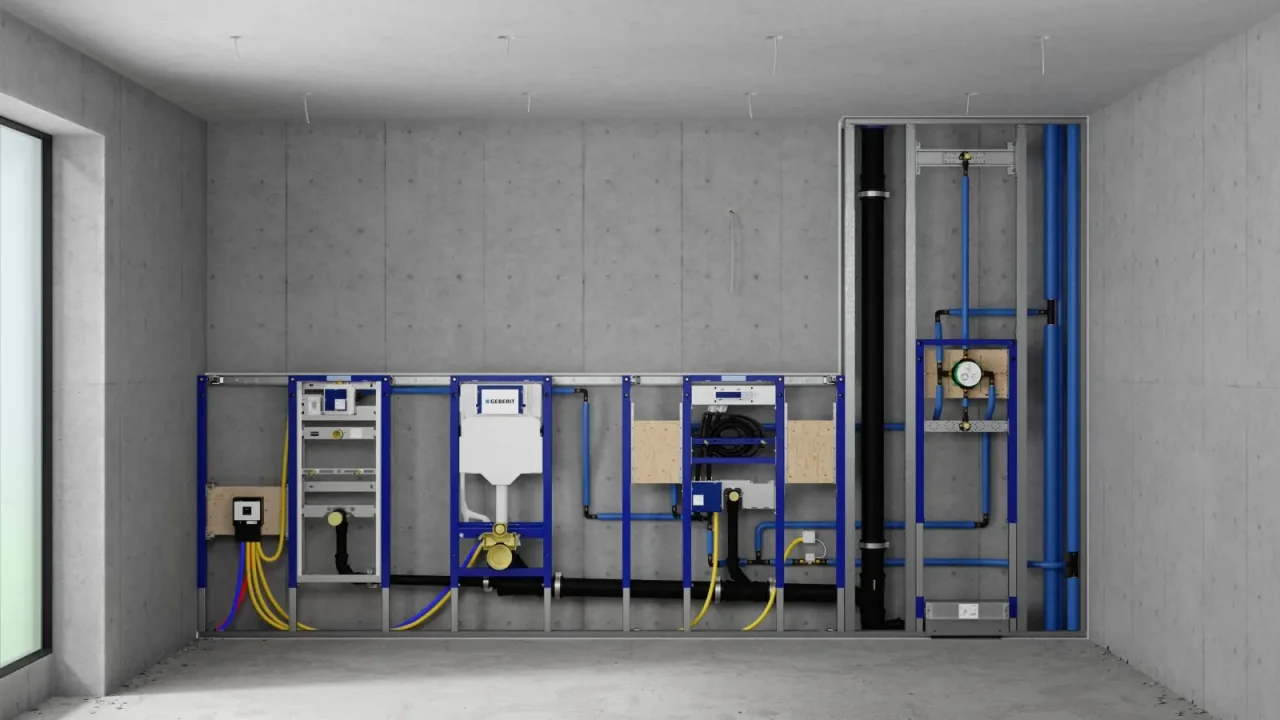
Geberit explains that concealed-cistern components are reached through the intended service opening behind the plate. Follow the assembly instructions and involve the installer if unfamiliar with the procedure. Breaking tiles should not be the first step.
03
Establish the cause before selecting a part
Flow can be related to filling, mechanism closure or the control. Limescale alone does not identify the faulty component. Request diagnosis and the reference of the proposed replacement part.
Before intervention, isolate the supply using the appropriate procedure. Avoid improvised cleaning products inside the cistern and repeated adjustments without a method. Randomly changing flush volume can also affect the WC-and-drainage assembly’s operation.
04
Check the repair and retain records
After intervention, check several cycles with the professional: filling, stopping, activation and absence of persistent flow. If the fault was intermittent, allow an observation period and report recurrence using the same comparisons.
Keep the cistern reference, replaced parts and intervention date. These details help EDIFIS support Geberit equipment. In a group of rooms or homes, a location-based register avoids confusing assemblies installed at different dates.
Before you decide
- Observe after filling stops.
- Record the concealed assembly reference.
- Diagnose before replacing.
- Check and document the repair.
The essentials
Your questions, our guidance.
Must the wall be broken for routine maintenance?
Cisterns are designed with service access; the procedure depends on the model and intervention.
Does an identical-looking plate guarantee the same internal part?
No. Confirm compatibility using the exact cistern and mechanism.
From idea to project
Discover at EDIFIS
Geberit systems at EDIFISFrames and cisternsRequest supportConfirm references, configurations, finishes and availability for your project.
Documentation & references
EDIFIS design advice. For specifications and installation, consult the documentation for the selected reference.
Geberit · WC noise and operation ↗Geberit · flush and fill valves ↗