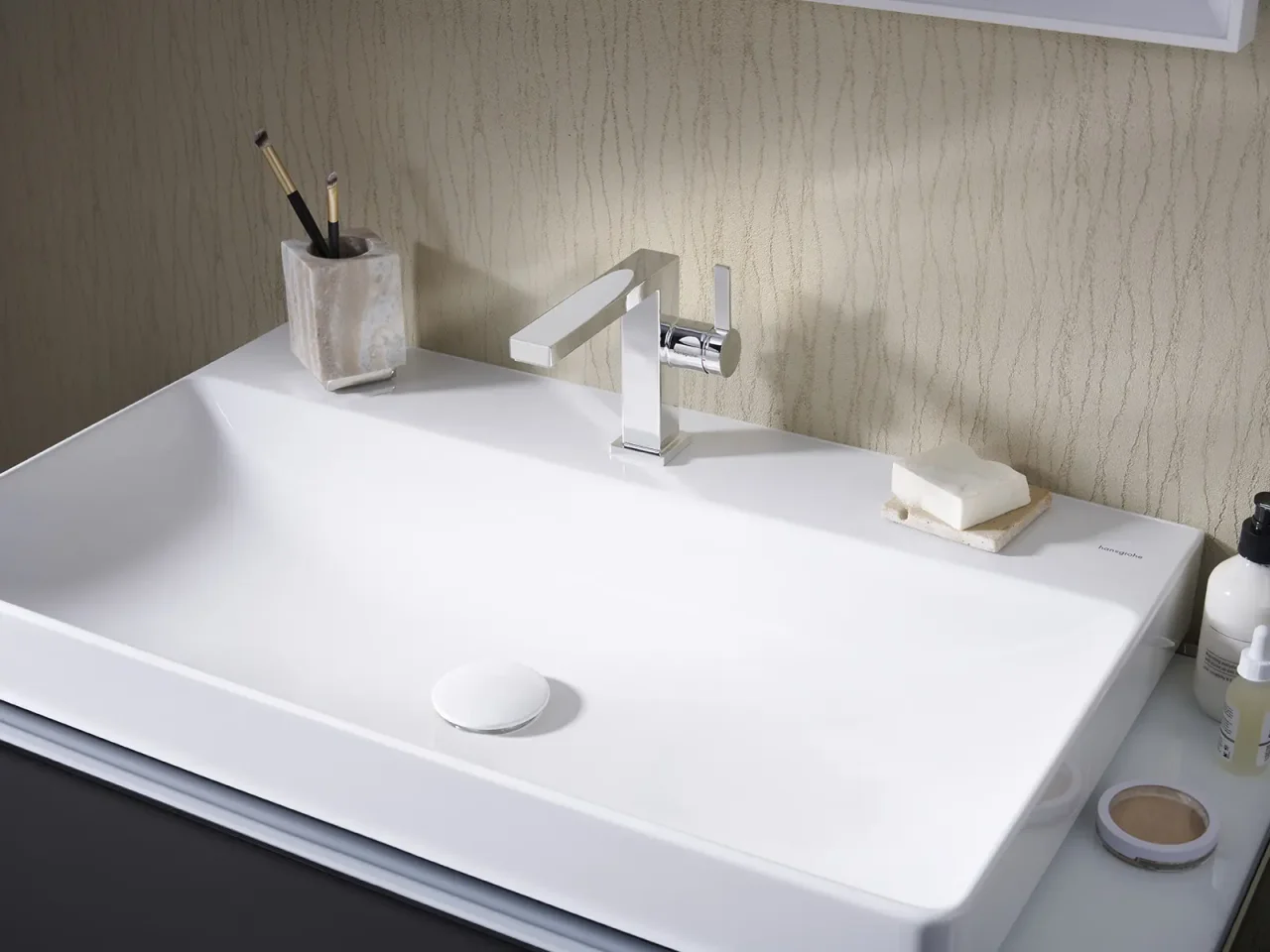

An odour near the sink may come from accessible residue, a trap no longer functioning correctly or a problem further along the drainage system. Before trying multiple products, describe when it occurs and observe the drainage. This helps guide appropriate care or a professional diagnosis.
01
Locate and describe the problem
Does the smell come from the waste, overflow or cabinet? Does it appear after an absence, during dishwasher discharge or continuously? Also check whether several water points are affected.
Record accompanying signs: slow drainage, gurgling, moisture or drops under the sink. An installation photograph and short description are often more useful than a guess about the replacement part.
02
Clean only accessible components
Remove basket debris and clean accessible surfaces using methods compatible with the sink and waste. Consult the manuals for user-removable components without forcing unfamiliar parts.
Never mix cleaning or drain-clearing products. If a product has already been used, retain its name for the plumber. Avoid improvised work on connections that are difficult to reach.
03
Understand the trap’s role
A water-seal trap holds water that limits sewer odours entering the room. This reserve may decrease after prolonged disuse; persistent odours nevertheless warrant investigation.
Connection layout, drainage ventilation and watertightness may also be involved. Adding fragrance or replacing only the waste fitting will not automatically correct these possible causes.
04
Recognise when professional help is needed
Arrange intervention if odours return quickly, wastewater backs up, several appliances are affected or a joint leaks. Supply your observations and available references to help prepare the visit.
In a new project, leave room to access the trap and connections. Organise storage without blocking them: maintenance planned from the start is easier than emptying an entire cabinet.
Before you decide
- Record when the odour appears.
- Check drainage and moisture.
- Follow maintenance instructions.
- Keep the trap accessible.
The essentials
Your questions, our guidance.
Does an odour always mean a blockage?
No. Residue, the water seal, watertightness or the drainage network may be involved. Drainage behaviour and circumstances help guide diagnosis.
Should the trap be replaced immediately?
Not without identifying the cause. A replacement must suit the installation and resolve the observed problem.
From idea to project
Discover at EDIFIS
Plan a kitchen water pointCare for a composite sinkConfirm references, configurations, finishes and availability for your project.
Documentation & references
EDIFIS design advice. For specifications and installation, consult the documentation for the selected reference.
Geberit · the water seal’s purpose ↗Geberit · sink waste and trap ↗