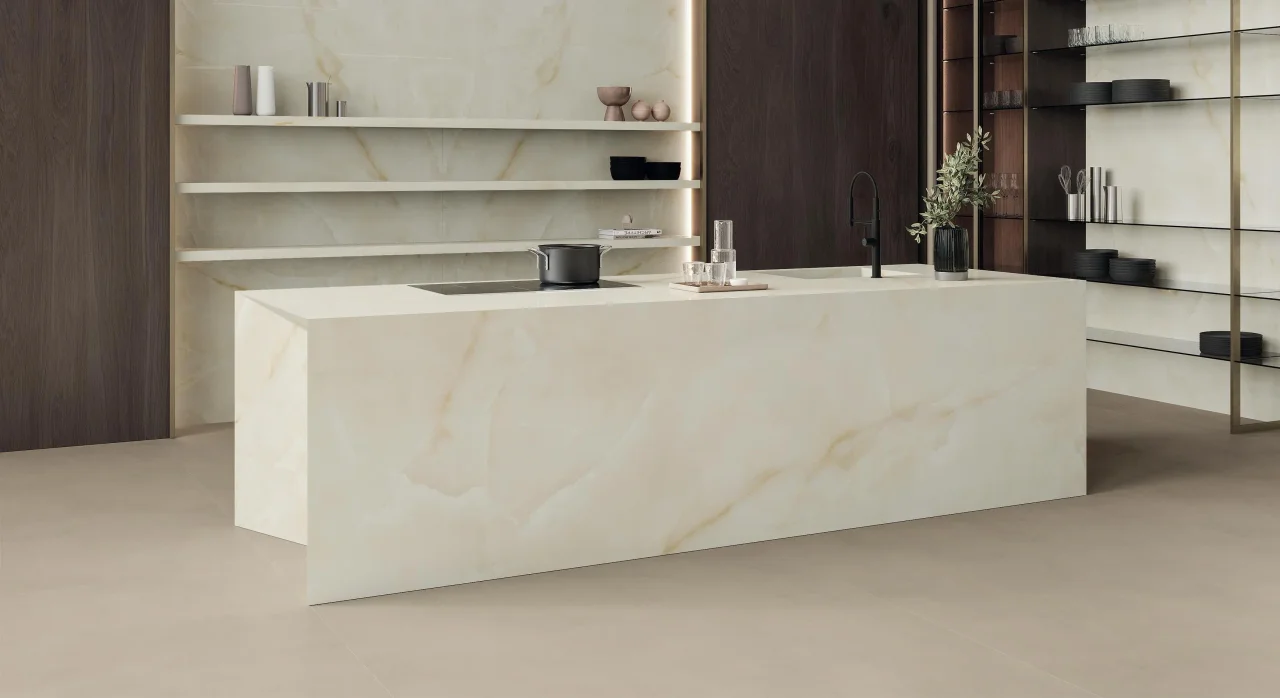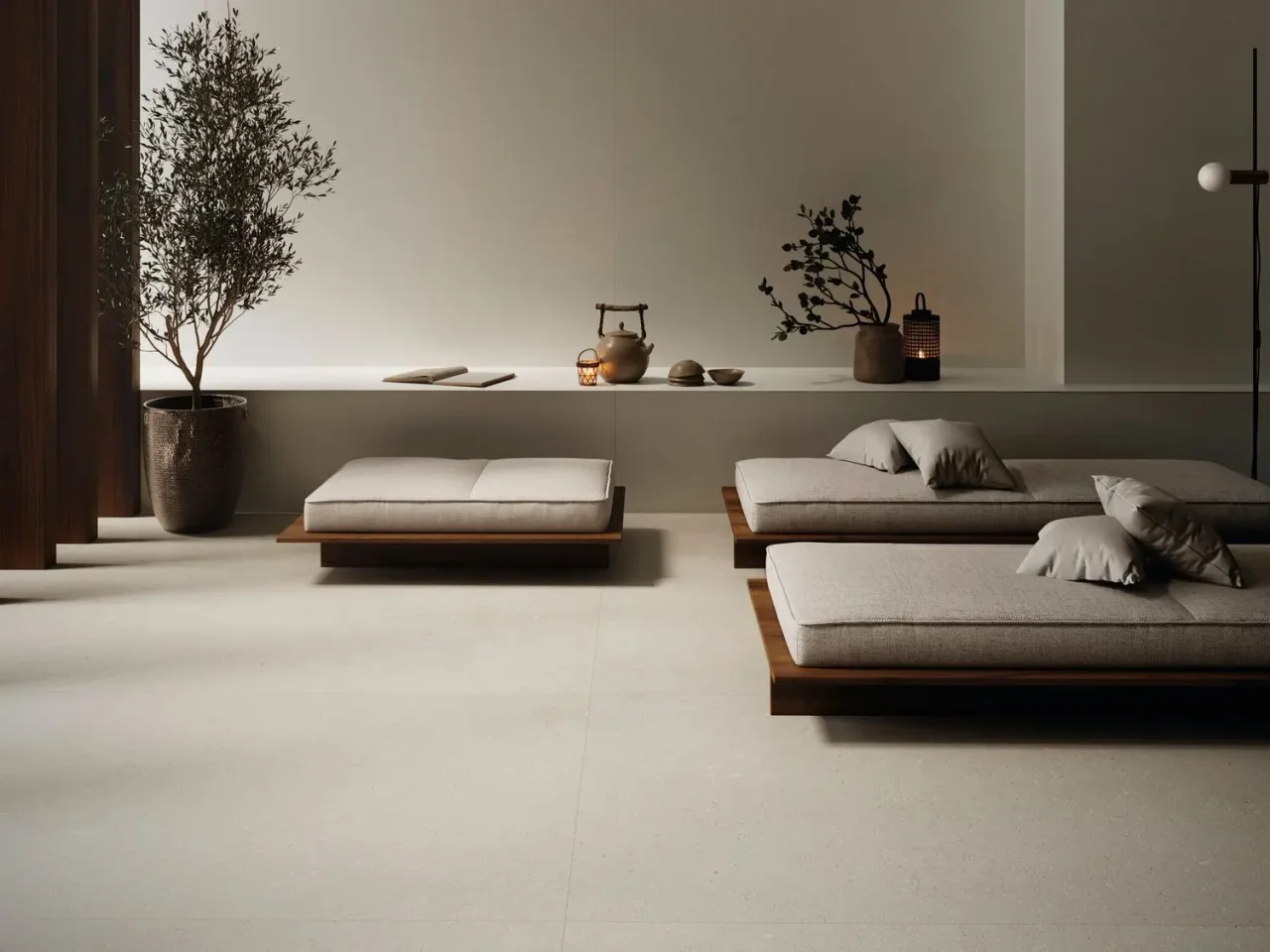
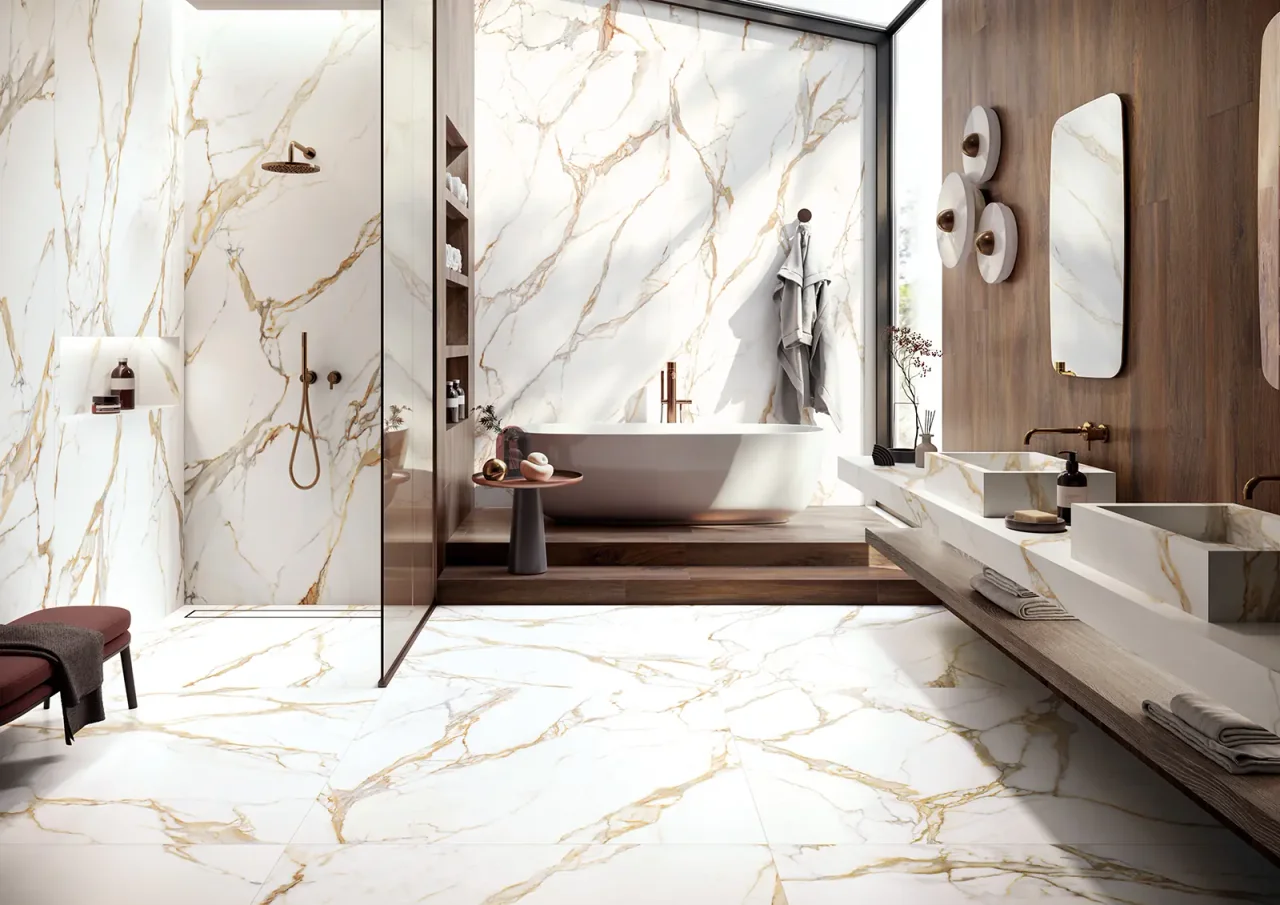
Choosing the same design for floor and wall gives a project a clear direction. A collection often includes several sizes, thicknesses and finishes, however. Check the combination on the delivered products, including dimensions and shades, especially when grout lines need to continue from one plane to another.
01
Separate the design name from the reference
Create a separate line in your schedule for the floor and for each wall. Record the complete reference, size, finish and intended use. Wall and floor versions can share a name without looking exactly alike.
Light reinforces this difference: horizontal and vertical tiles receive different reflections. Compare samples in their future orientation beside the chosen fittings and furniture.
02
Read labels before distributing the boxes
On delivery, retain batch, shade and calibre details where shown on packaging. Calibre is a manufacturer’s dimensional classification; it does not replace checking the dimensions needed for the tile layout.
Have boxes allocated to the same surface checked for consistency before installation. If a difference seems abnormal, separate the affected references and ask the supplier. Deciding before bonding is much easier than correcting after grouting.
03
Allow for variation in the pattern
Stone and marble effects can include several patterns and intentional variation. Atlas Concorde uses a V-SHADE indication to describe visual variation. This helps explain a collection but does not replace viewing several tiles together.
Ask the installer to prepare a distribution suited to the design. Strong veins placed together by chance may create a visual concentration. Conversely, demanding complete uniformity from an intentionally varied collection may contradict its design.
04
Check alignments using actual dimensions
Do not assume two nominal formats align automatically. The planned joint, actual dimensions and tolerances affect repetition. Set out a starting line and check several modules before fixing the axes.
At EDIFIS, prepare this comparison with your chosen Cifre Cerámica, Tagina or Atlas Concorde collections. Good coordination may also use an intentional offset or a clearly designed transition instead of an alignment that cannot be maintained on site.
Before you decide
- Separate each floor and wall reference.
- Photograph box labels.
- View several tiles of the design together.
- Approve tile and grout modules together.
The essentials
Your questions, our guidance.
Will two tiles with the same stated size necessarily align?
No. Check actual dimensions and include the specified grout width.
Is shade variation always a defect?
No. Some collections deliberately vary; compare the material with manufacturer information and approved samples.
From idea to project
Discover at EDIFIS
Surface selectionTagina at EDIFISAtlas Concorde at EDIFISConfirm references, configurations, finishes and availability for your project.
Documentation & references
EDIFIS design advice. For specifications and installation, consult the documentation for the selected reference.
Atlas Concorde · FAQ and V-SHADE variation ↗Atlas Concorde · preparing installation ↗