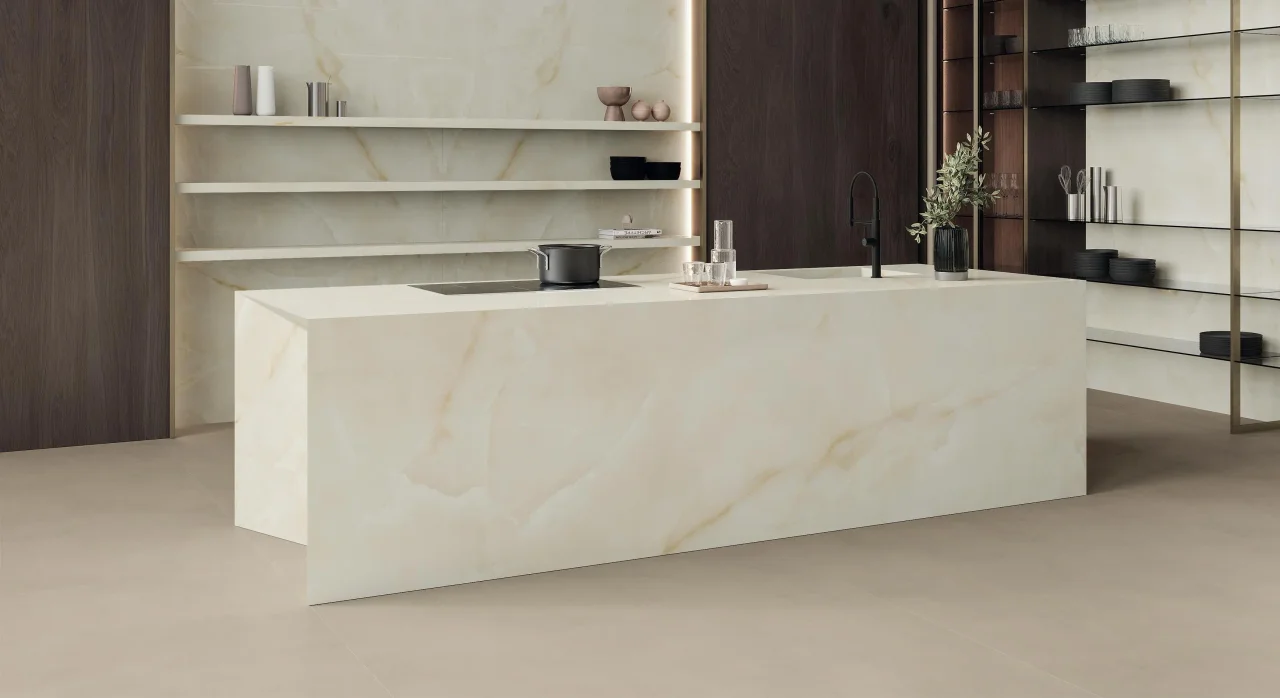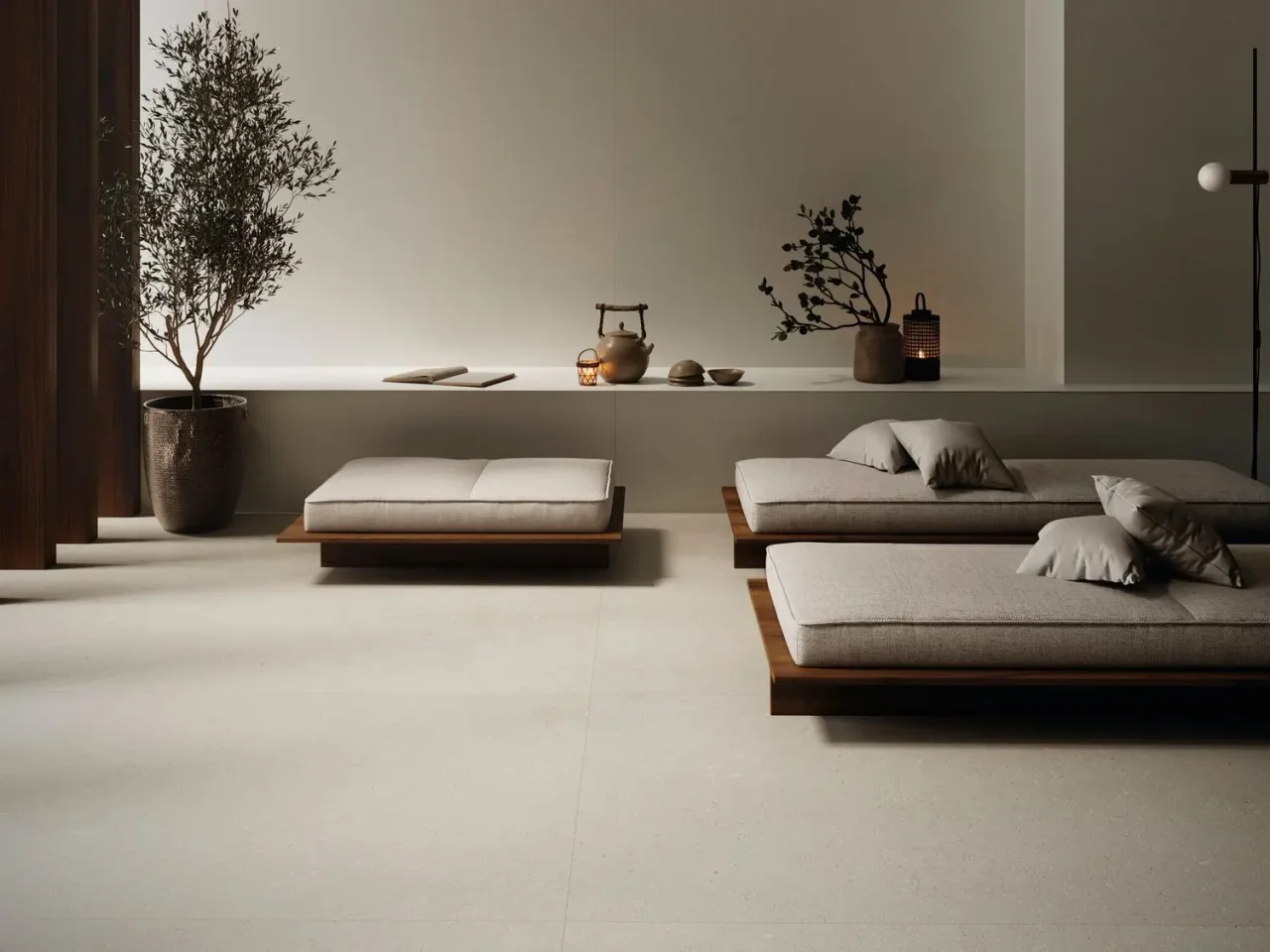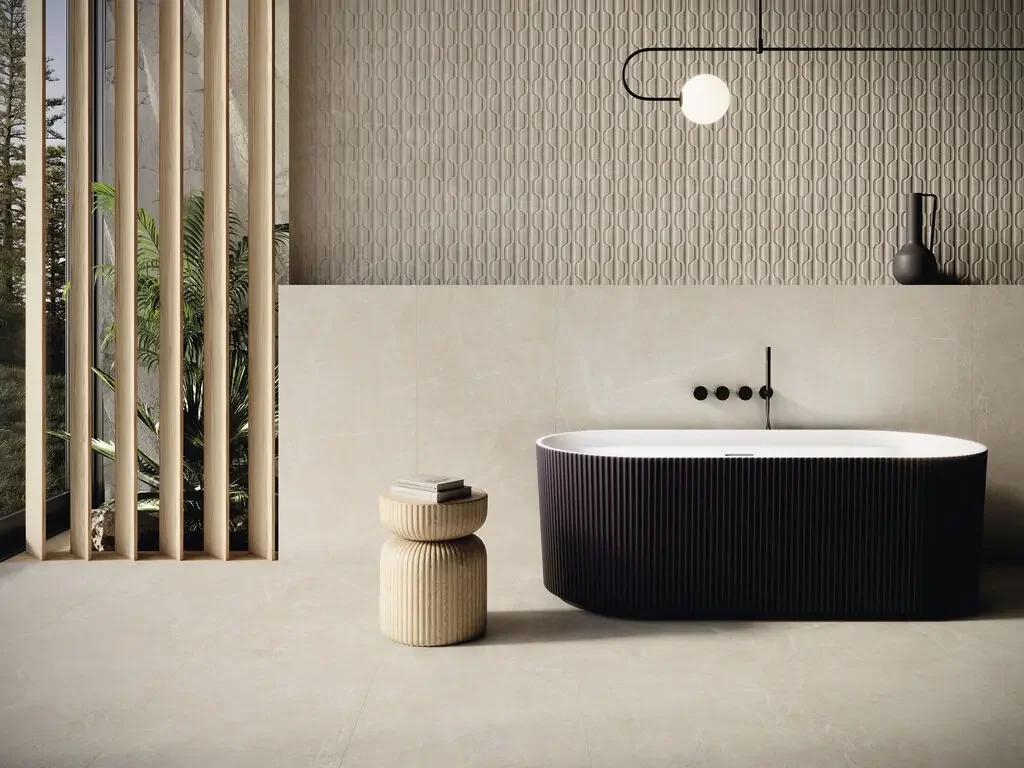
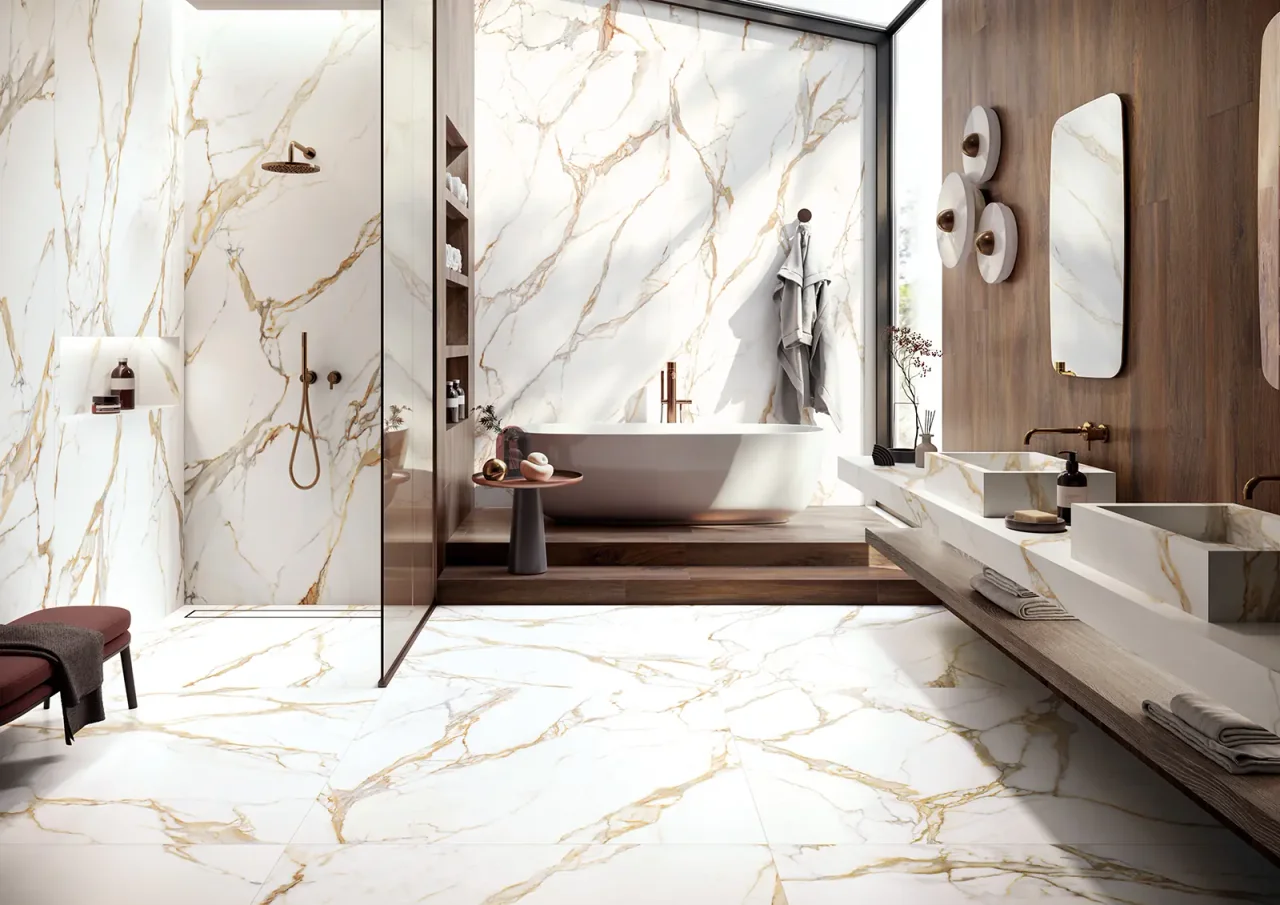
A beautiful tiled surface always ends somewhere: at a splashback edge, around a niche or against another material. These lines determine the project’s perceived quality. Deciding them after installation may force a poorly matched profile or leave an exposed edge that was never intended.
01
Identify every exposed edge
Highlight splashback ends, wall returns, niches and junctions with furniture on the plans. Separate concealed edges from those visible on entering the room. This hierarchy focuses detailing effort on the most sensitive locations.
Check the colour and appearance of the actual tile’s edge. Its surface decoration does not automatically continue through its full thickness. An inspiration photograph may conceal this detail, especially with marble effects or strongly contrasting finishes.
02
Compare the available solutions
Depending on the collection, matching trim pieces may exist. An added profile or workshop-prepared corner cut can also be considered. Each option must suit the thickness, use and product recommendations; none is universally preferable.
For Tagina, Atlas Concorde or Cifre collections presented by EDIFIS, ask which components are actually offered with the selected tile. A piece seen in another range is not automatically compatible. Confirm size, colour and lead times before fixing the detail.
03
Coordinate the profile with other metals
If a metal profile remains visible, place its sample beside the tap, waste fitting and handles. Names such as chrome, bronze or gold do not guarantee identical shades across manufacturers. A discreet profile can follow the surface instead of trying to reproduce the dominant metal.
Look at the profile straight on and obliquely. Its width and sheen may create a stronger line than expected. In a small bathroom, many outlines can fragment the walls; choose the edges that genuinely deserve emphasis.
04
Plan durability and cleaning
A corner exposed to impacts or passing traffic needs an appropriate solution. Ask the contractor to examine edges, cut quality and junctions. The chosen detail should remain pleasant to touch and easy to clean, without fragile or inaccessible areas.
Approve a small assembled sample when the corner is central to the design. Include special pieces, profiles and fabrication work in the quotation. Planning these items makes quotations easier to compare and avoids a rushed decision near completion.
Before you decide
- Identify visible edges.
- Examine the actual tile edge.
- Compare compatible trims and profiles.
- Approve an assembly before repeating it.
The essentials
Your questions, our guidance.
Is a mitred corner suitable for every tile?
No. The professional must assess material, thickness, exposure and fabrication methods.
Must the profile exactly match the tap colour?
No. It can follow the covering or form an intentional contrast after comparing samples.
From idea to project
Discover at EDIFIS
Tagina collectionsEDIFIS surfacesCompare finishes in the showroomConfirm references, configurations, finishes and availability for your project.
Documentation & references
EDIFIS design advice. For specifications and installation, consult the documentation for the selected reference.
Atlas Concorde · installation guidance and corner pieces ↗