The flush plate is often chosen after tiles and taps. Yet it belongs to the same material language. Bringing it into the selection earlier lets you build a discreet or bold combination, then verify that the solution suits the cistern and wall.
01
Tone-on-tone: let the wall finish speak
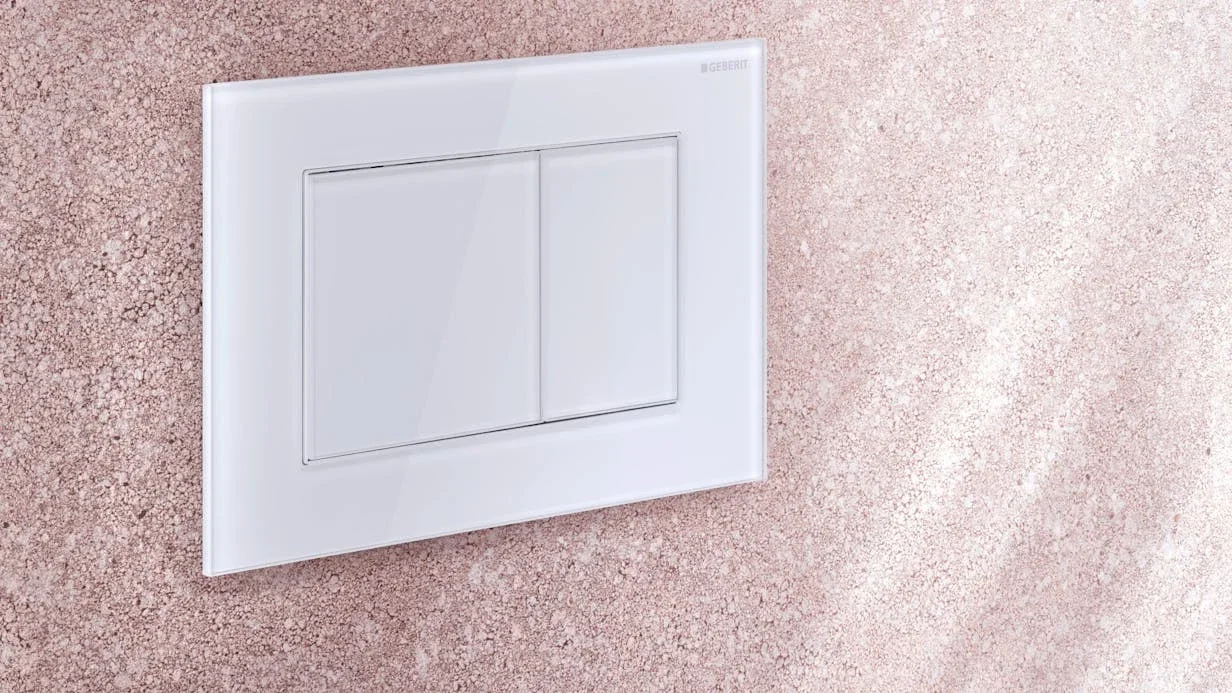
A plate close to the wall tone reduces contrast. This approach suits a veined finish or texture intended as the main feature. Compare actual shades: a very cool white may stand out sharply against cream ceramics.
Tone-on-tone does not erase surface differences. A glass plate reflects differently from a matt tile. Look at the combination under project lighting; that difference can enrich the scheme when anticipated.
02
A metallic echo: connect the two water points
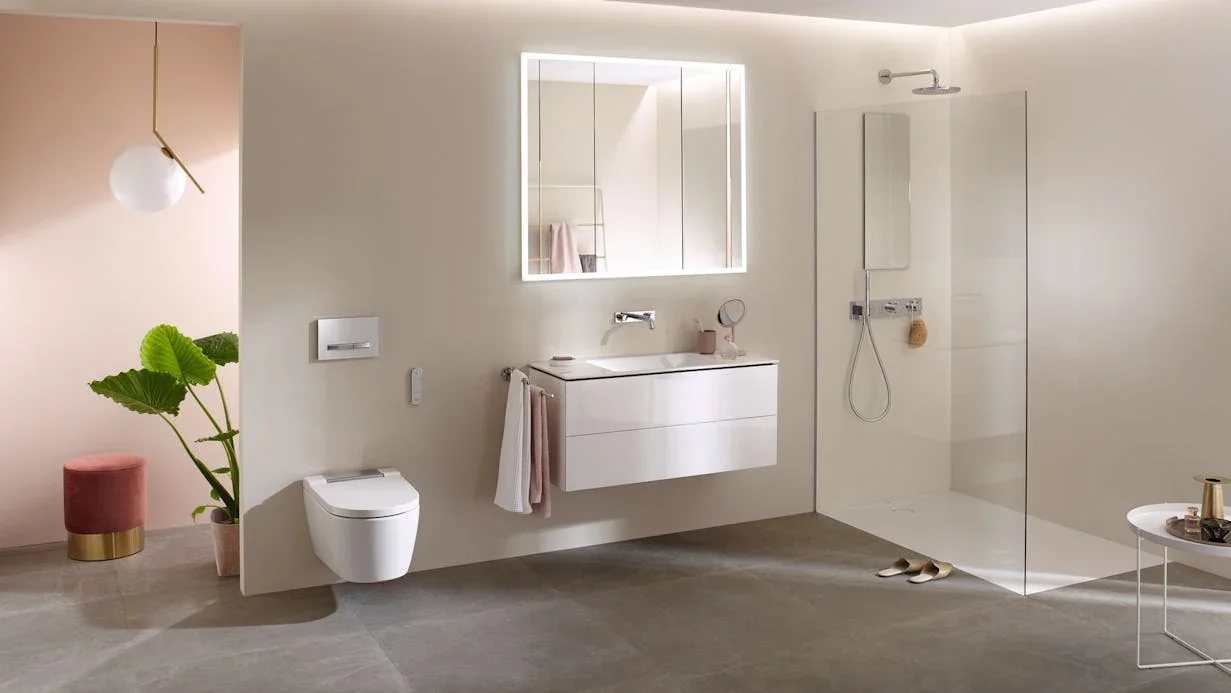
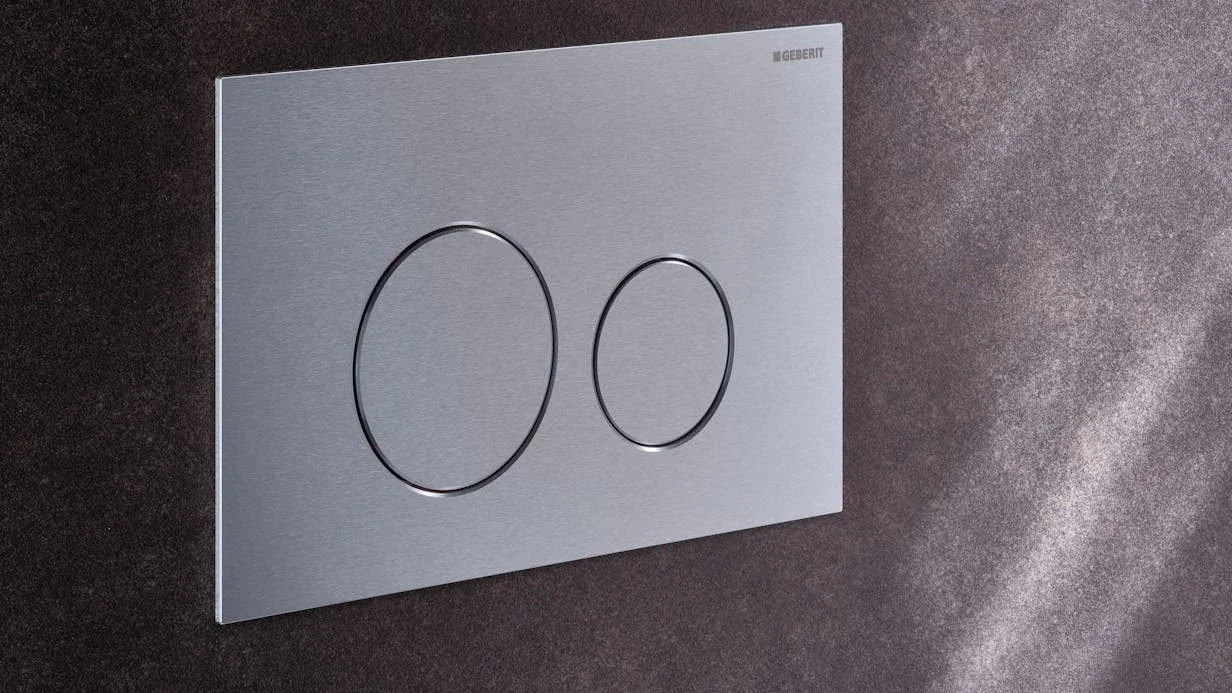
Repeating a metal tone connects basin and WC. Sigma40, Sigma50 and Sigma70 offer different finish approaches depending on reference. Choose the compatible family and desired design before comparing colours.
To coordinate THG Paris or Deante tapware, bring samples together rather than photographs. Grain, sheen and undertone matter. Geberit’s customised Sigma40 finishes also open possibilities to investigate case by case.
03
Graphic contrast: give the detail its place
A dark plate on a light wall can echo a black tap or screen profile. Limit repetition so the contrast retains its force. If every accessory becomes a black line, the room may lose the intended hierarchy.
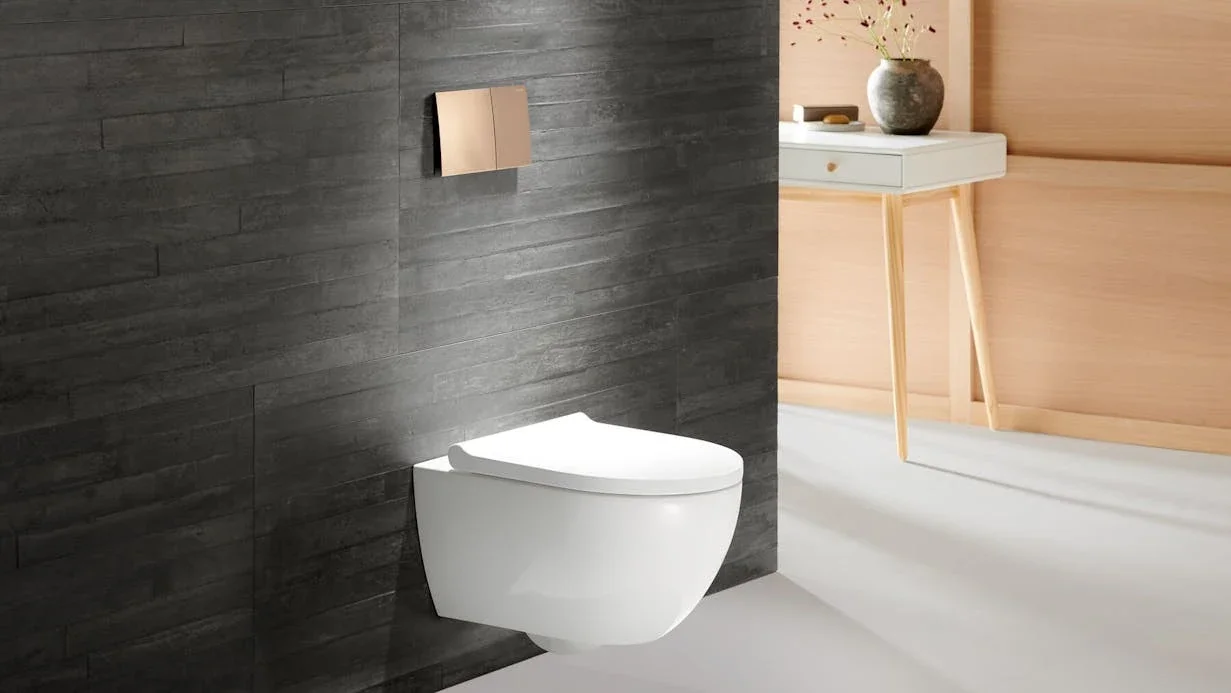
On a dark wall, a lighter metal can make the control very legible. Examine tile-layout lines and any nearby shelf. Position the plate as a composition element with enough space around its outline.
04
Check both aesthetic and technical fit
A beautiful material pairing guarantees no compatibility between plate and cistern. Identify cistern family and generation first, then the intended control reference. In renovation, this precedes ordering any finish.
Also check mounting surface, thicknesses and access needed to remove the plate. Relief tiles or a shelf may change the detail. Approve the decorative choice and installation together to preserve the intention through completion.
Before you decide
- Choose tonal continuity, echo or contrast.
- Compare materials under the same light.
- Identify cistern and plate reference.
- Check wall and removal clearance.
The essentials
Your questions, our guidance.
Must the plate be the same colour as the tap?
No. Three strategies are possible: continuity with the wall, a metal echo or deliberate contrast. Choose what best supports the composition.
Can the plate be chosen after tiling?
Sometimes, but early selection makes thickness, joints and access easier to coordinate. Some solutions require specific preparation.
From idea to project
Discover at EDIFIS
Explore Geberit design platesDiscover THG ParisDiscover DeanteCompose materials in the showroomConfirm references, configurations, finishes and availability for your project.
Documentation & references
EDIFIS design advice. For specifications and installation, consult the documentation for the selected reference.
Geberit · choosing flush plates ↗Geberit · customised Sigma40 finishes ↗