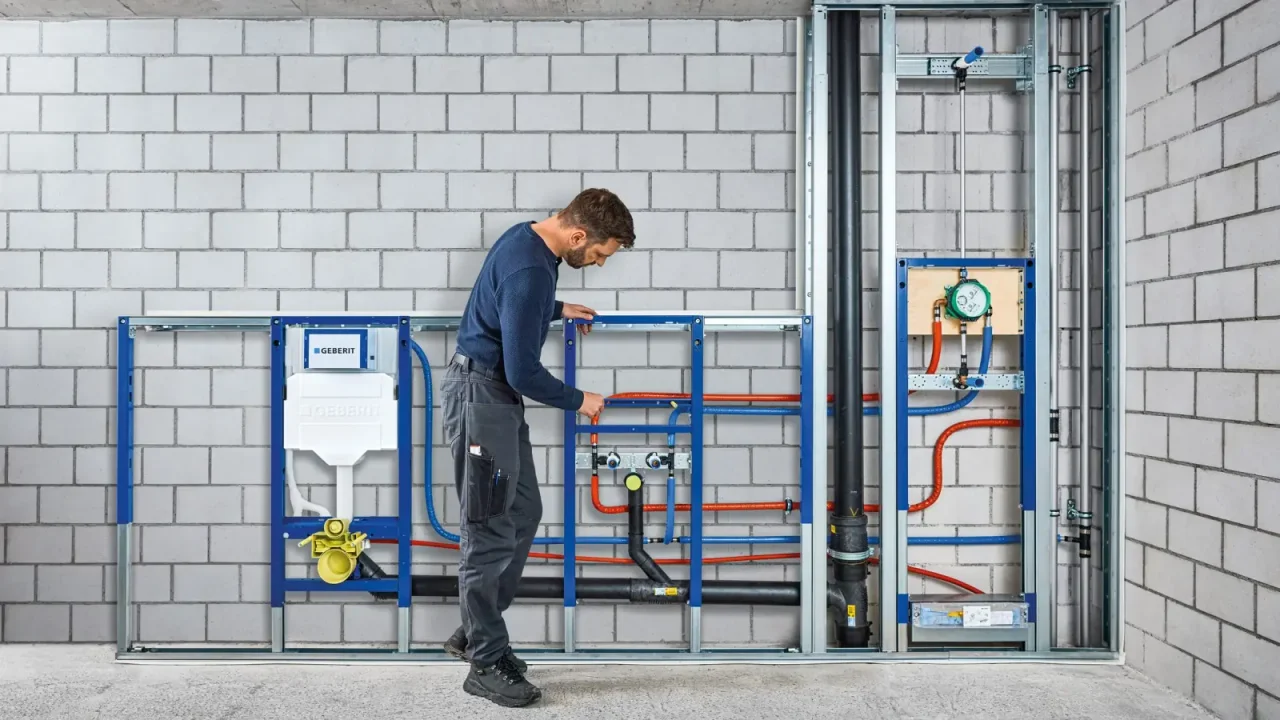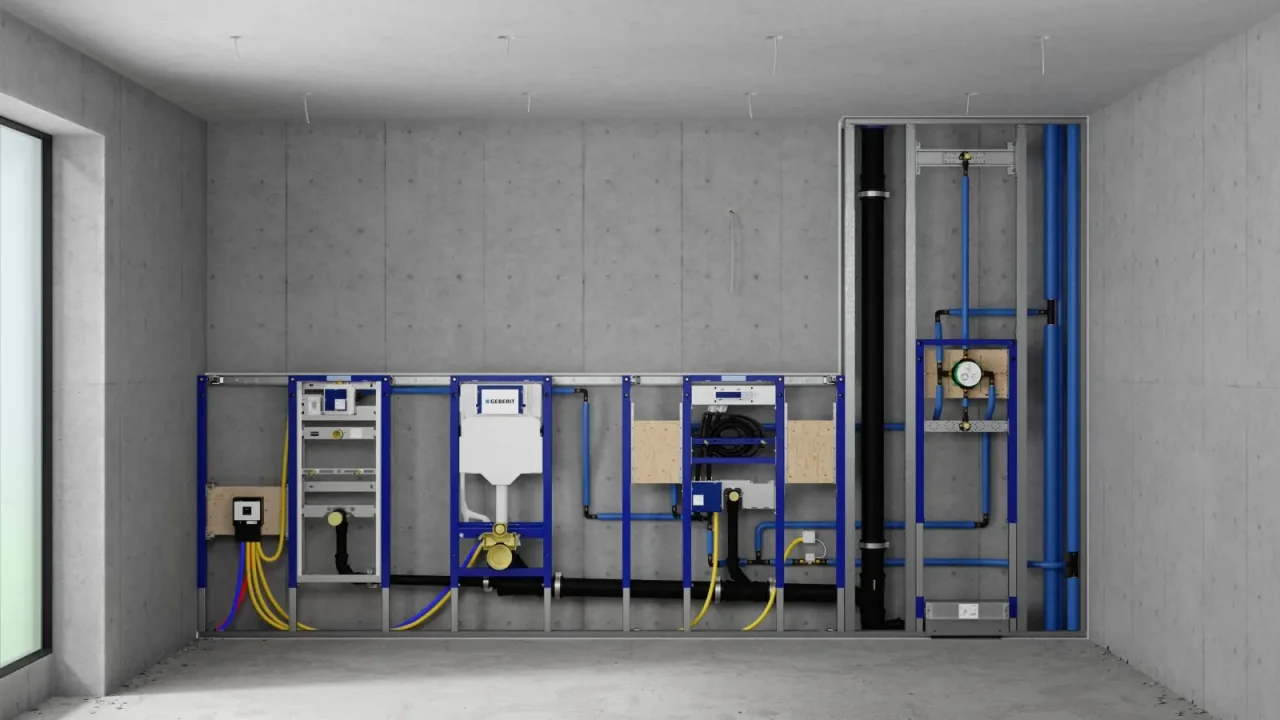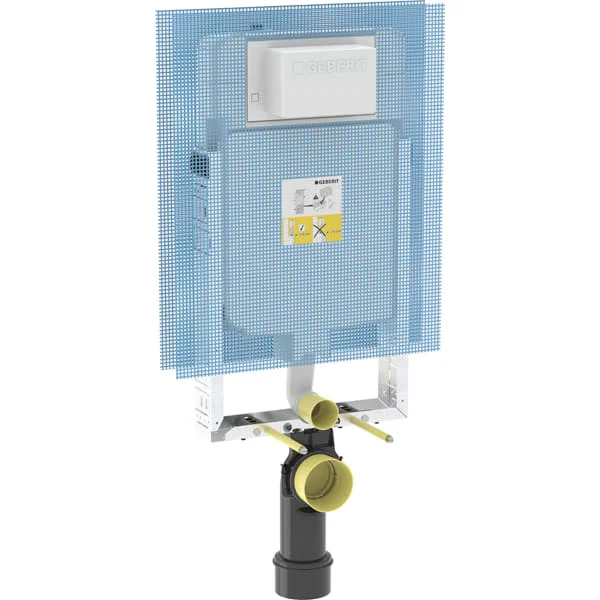
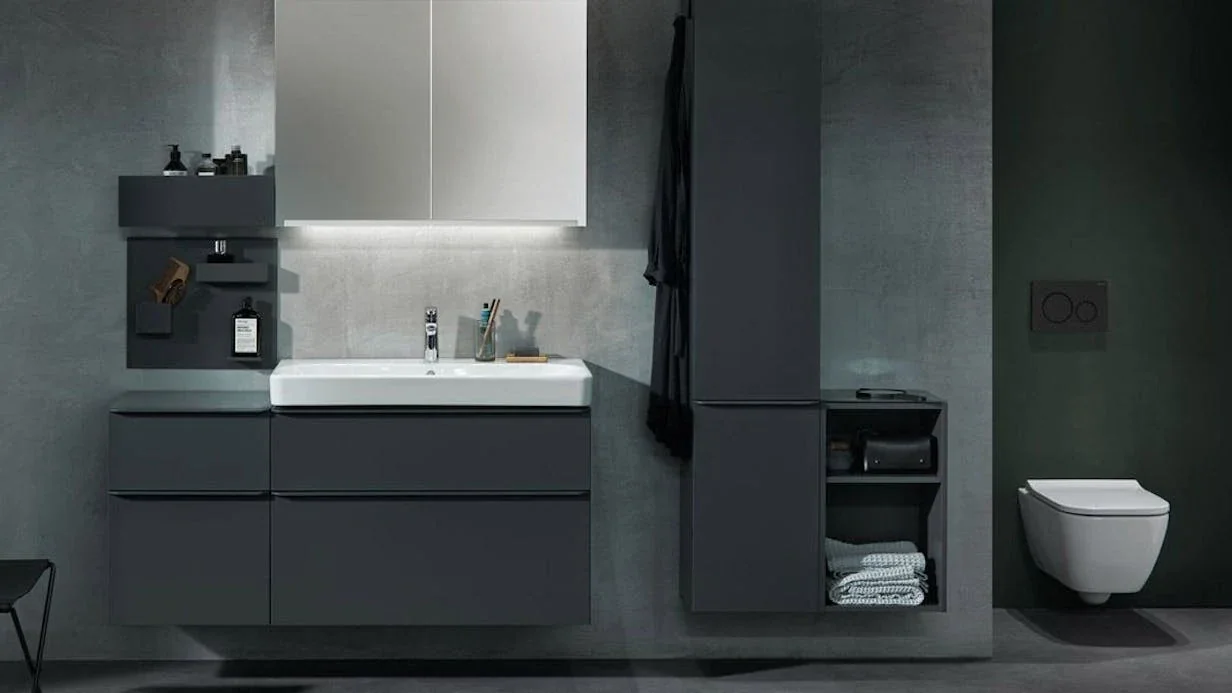
A damaged plate or a change of décor may prompt you to replace the toilet flush control. During renovation, however, the first decision concerns the cistern already installed. Before ordering a new Geberit flush plate, gather the information needed to retain a functioning system, without confusing external resemblance with compatibility.
01
Build a brief record of the existing installation
Photograph the whole plate, its buttons and its position in the wall. If possible, find the invoice, the installation frame reference and the date of the work. This date provides a useful clue, but does not prove the cistern’s generation on its own: equipment may have been stored or partly replaced.
Also note why you want to replace it. A worn finish, a broken button and a flush that operates poorly do not necessarily call for the same work. Describing the symptom helps avoid ordering a new faceplate when the problem lies inside the mechanism.
02
Have the cistern behind the plate identified
Geberit explains that useful markings can be found behind the plate and its mounting frame, including on a protective cover or label. Have a professional remove the plate according to its instructions, without levering against the tiles. Photograph any legible markings and the arrangement revealed.
The Geberit Pro app helps professionals identify older equipment and find instructions, spare parts and conversion kits. An external photograph provides a starting point; the characteristics recorded on site help confirm the model and its manufacturing period.
03
Check the complete operating connection
The plate must match the identified flushing system. Then check the mounting frame, the transmission components and any parts required for that generation. Geberit notes that some older cisterns may need a conversion kit. Visible dimensions do not establish whether one is required.
Ask for a proposal that distinguishes the plate itself, included components and additional parts. A mechanical control and a special function are not automatically interchangeable. Have the exact application of the reference confirmed in documentation for the relevant market.
04
Order, test and keep the references
EDIFIS presents Alpha01 plates, including the round white reference 115.035.11.1. This can provide a point of comparison after a compatible system has been identified; it is not a universal solution for every Geberit cistern. Send your installation record before settling on the finish.
After installation, have each control tested, including its return to rest, refilling and the absence of persistent water flow. The plate must remain removable for servicing. Keep the new reference, the references of any added parts and photographs of the original installation with the property documents.
Before you decide
- Photograph the plate and find the documents.
- Have the cistern markings recorded.
- Confirm the frame, control and required parts.
- Test operation and keep the references.
The essentials
Your questions, our guidance.
Can a plate of the same size replace the old one?
Size alone is not sufficient. The mounting system and operating connection must match the cistern and its generation.
Does the wall have to be opened to replace the plate?
A compatible replacement normally uses the existing opening. The professional must check the installation and required parts before confirming the work.
From idea to project
Discover at EDIFIS
Geberit flush plates at EDIFISRound white Alpha01: check the referenceExplore GeberitPlan a showroom visitConfirm references, configurations, finishes and availability for your project.
Documentation & references
EDIFIS design advice. For specifications and installation, consult the documentation for the selected reference.
Geberit · identifying a compatible flush plate ↗Geberit Pro · identification and spare parts ↗Geberit · round Alpha01 product data ↗