A drainer may be essential after a meal and inconvenient during preparation. In a compact or open kitchen, the right compromise comes from examining the water point in its different states of use. An integrated ledge and a removable accessory require different amounts of space and different organisation.
01
Measure what actually air-dries
List items washed by hand: knives, boards, delicate glasses, pans and small accessories. Their quantity and frequency help establish useful draining space. Do not size the entire water point around an exceptional situation that rarely occurs.
If the dishwasher handles most dishes, a movable accessory may suffice. Conversely, a kitchen where several people often wash by hand may benefit from permanent draining space. The choice depends on actions, not merely furniture style.
02
Understand the role of an integrated ledge
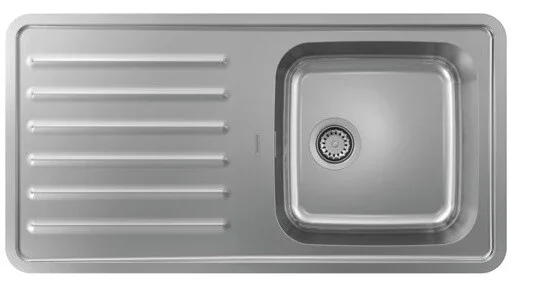
The drainer forms part of the sink and establishes an identifiable wet area. Check its shape, connection to the bowl and installation instructions. The water route must remain consistent with the product’s intended orientation and worktop level.
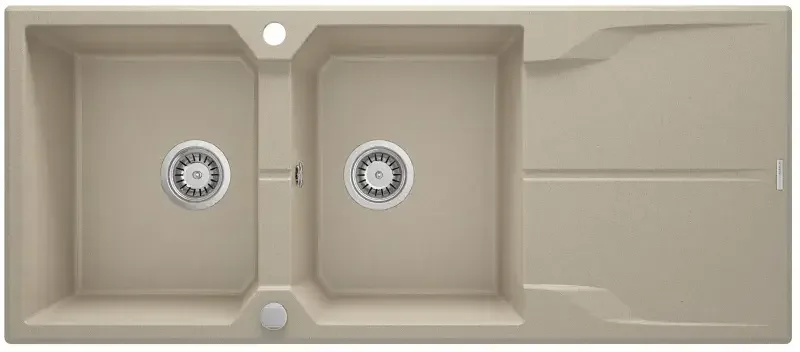
This ledge occupies permanent space. Draw the worktop remaining for chopping and setting down a hot dish on its support. A long overall sink dimension can conceal a relatively compact bowl; compare usable dimensions separately.
03
Plan the full cycle of a movable accessory
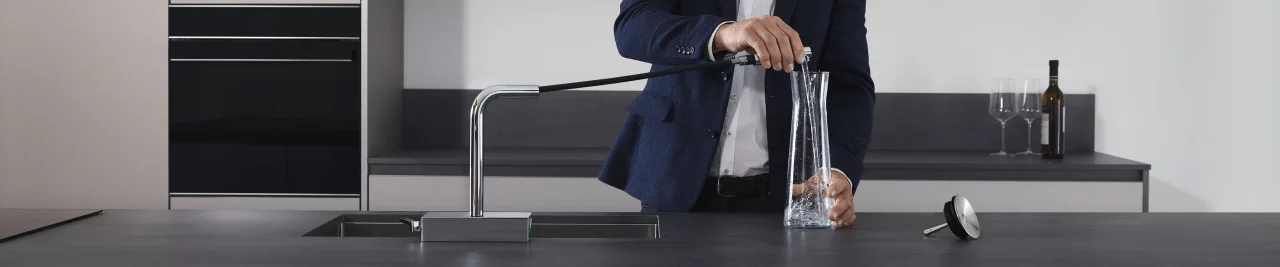
A removable drainer frees space when stored. For that benefit to be real, decide its storage location and drying method from the outset. An accessory constantly left on the worktop is effectively a permanent installation.
Also check its supports and where water runs. A solution beside the sink should not leave puddles at the worktop joint or against the backsplash. Contact materials must suit the use and manufacturer’s instructions.
04
Approve the direction of movement
Place draining near dish storage without needlessly crossing food preparation. Consider dishwasher opening and movement with two people present. The most logical side does not follow solely from being right- or left-handed.
Ranges such as Deante Andante and hansgrohe S41 offer different configurations. Reversibility must be checked for the chosen reference, including holes and accessories. Approve orientation on the kitchen plan before cutting and installation.
Before you decide
- Assess items genuinely washed by hand.
- Separate bowl and drainer dimensions.
- Plan storage and water drainage.
- Approve the reference’s orientation.
The essentials
Your questions, our guidance.
Does a removable drainer always save space?
Only if it can easily dry and be stored. Otherwise, it occupies the worktop permanently.
Are all sinks with drainers reversible?
No. Check the reference, holes and instructions before choosing the installation side.
From idea to project
Discover at EDIFIS
Andante double-bowl sink with drainerCompare hansgrohe sinksPlan your layoutConfirm references, configurations, finishes and availability for your project.
Documentation & references
EDIFIS design advice. For specifications and installation, consult the documentation for the selected reference.
Deante · Andante and reversibility ↗hansgrohe · S41 configurations ↗