Today’s kitchens bring preparation, washing and storage together around one water point. Choosing two bowls because yours is a family kitchen, or one large bowl because it looks uncluttered, is not enough. The right layout mainly depends on what you wash by hand and how several people use the worktop.
01
Observe a day in the kitchen
List the items that do not go in the dishwasher: stockpot, baking tray, couscous dish, mixing bowl or chopping board. Measure them including their handles. A large bowl can make handling easier, but its internal dimensions and corners matter more than the sink’s overall width.
Also note tasks performed together. Rinsing vegetables while a container soaks may justify a second bowl. If everything goes in the dishwasher, retaining more preparation space may be more useful than a second bowl that is rarely used.
02
Compare separation with freedom of movement
Two bowls let you allocate separate areas to different tasks. This arrangement is not, by itself, a hygiene guarantee: surfaces, accessories and hands must be cleaned between uses. Separation helps organise actions; it does not replace cleaning.
A large bowl accommodates wide objects more freely. A removable washing-up bowl or suitable colander can create a temporary area inside it. However, check where those accessories will be stored when you need the whole bowl.
03
Read the cabinet’s usable dimensions
A sink’s total width may include a substantial drainer. It therefore describes neither each bowl’s size nor the minimum cabinet required. Compare the technical drawing, the space between cabinet walls and access for fixings before choosing.
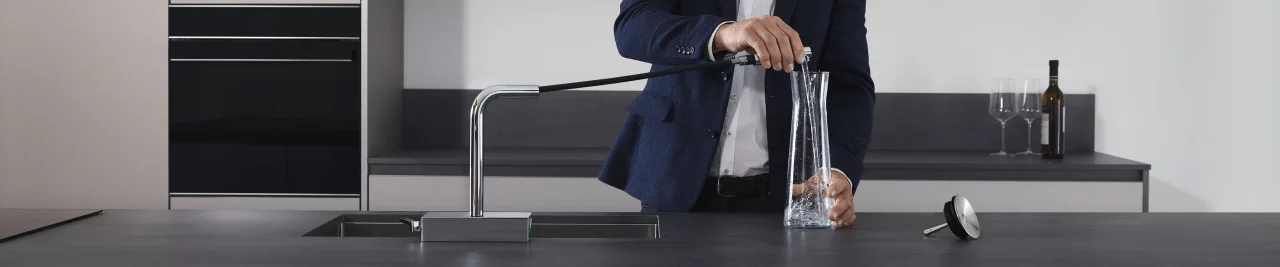
For a double sink, also examine the drains below the worktop. Trap, dishwasher connection and waste bins must fit together. A pull-out spray needs its own movement envelope; do not allocate the same space twice.
04
Try a full-size layout
Draw both options on cardboard placed on the worktop. Add your usual containers, the tap and the draining area. This exercise quickly reveals a shortage of free surface or insufficient spout reach over one bowl.
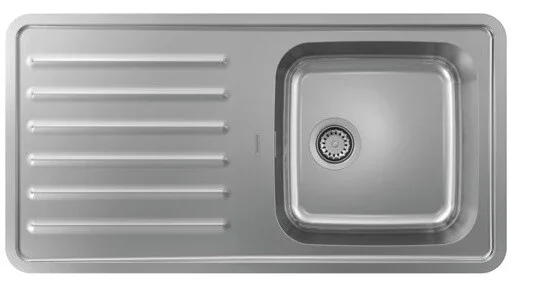
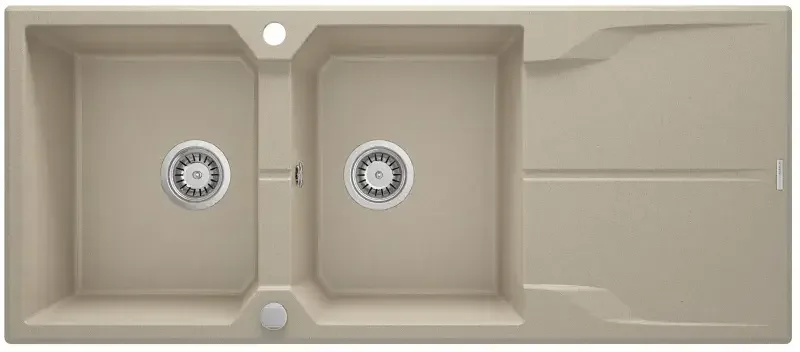
The Deante Andante selection presented by EDIFIS includes a double-bowl model with drainer. Compare it with single-bowl options on your plan. Your final choice should specify the reference, installation orientation, waste set and cut-out dimensions, confirmed before the worktop is manufactured.
Before you decide
- Measure the largest containers.
- Identify tasks genuinely performed simultaneously.
- Compare internal and overall dimensions.
- Draw the drains and storage.
The essentials
Your questions, our guidance.
Do two bowls necessarily use more water?
That depends on use and the volume actually filled. The number of bowls alone cannot establish consumption.
Can a large bowl suit a small kitchen?
Yes, provided the cabinet, cut-out and preparation surface remain suitable. A template helps compare the compromises.
From idea to project
Discover at EDIFIS
Explore EDIFIS kitchensAndante double-bowl sinkCompare hansgrohe sinksConfirm references, configurations, finishes and availability for your project.
Documentation & references
EDIFIS design advice. For specifications and installation, consult the documentation for the selected reference.
Deante · double-bowl Andante ↗hansgrohe · sink configurations ↗