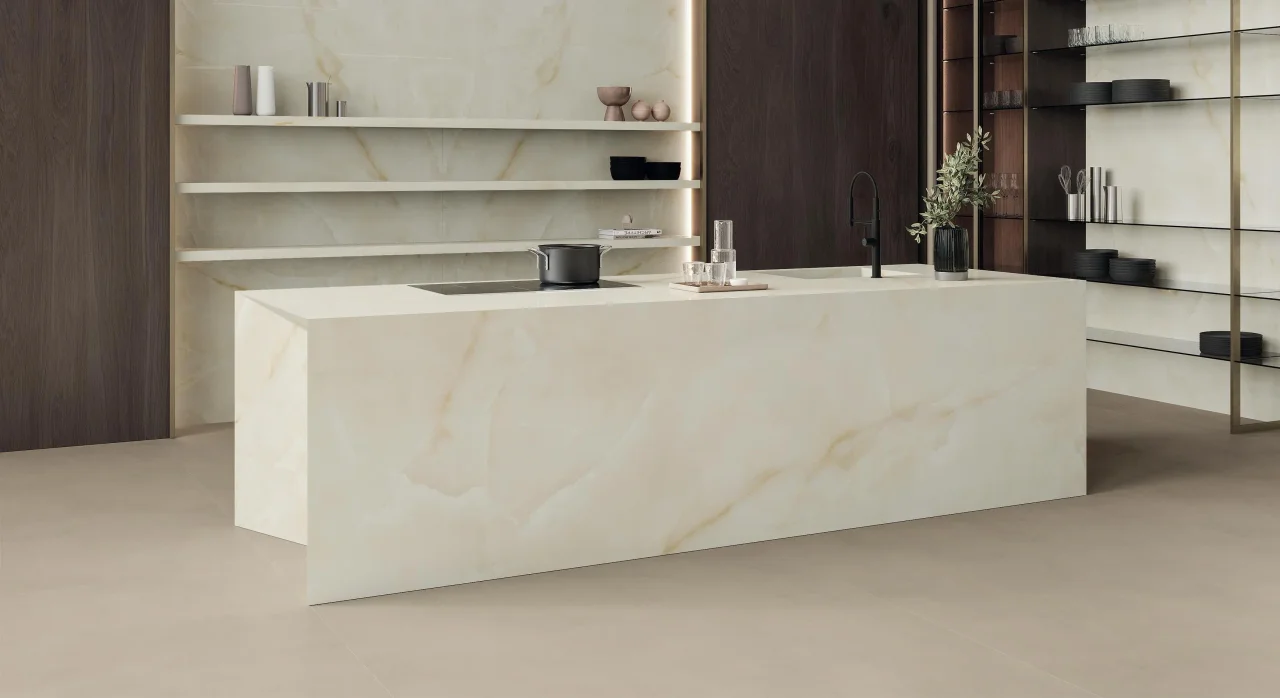

Contemporary projects often seek visually continuous surfaces. To achieve them durably, distinguish joints between tiles from junctions intended to accommodate movement in the construction. Their position depends on the installation system and substrate: coordinate them with the design instead of erasing them for a smoother photograph.
01
Distinguish what each joint does
The visible grout joint between two tiles contributes to the rhythm of a surface. Perimeter, intermediate and movement joints serve other purposes. Their type, position and treatment must be determined by the professional responsible for installation.
Avoid using the single word “joint” for the entire specification. Identify each junction, the proposed materials and their suitability for the intended use. A flexible joint alone does not replace a waterproofing system.
02
Identify sensitive points on the drawings
Corners, floor-to-wall junctions, shower-tray connections and changes of substrate need detailed attention. Also identify existing structural joints. The tiler needs this information before finalising the layout.
Bathroom refurbishment requires particular attention to retained substrates. Do not assume an existing junction can simply be covered over. A preliminary site visit identifies constraints that are not visible on a moodboard.
03
Coordinate technical requirements and appearance
A necessary line can sometimes coincide with a doorway axis, zone boundary or change of material, where the system permits. This makes the design more coherent; it does not justify freely relocating a technical requirement.
Compare available colours and profiles using samples. A tone close to the tile may make a junction less prominent. Keep a clear distinction in the specification between the desired colour and the performance the product must provide.
04
Document care and future interventions
Junctions must remain visible for inspection and accessible for maintenance. Consider how deterioration near the shower or basin will be noticed, and retain the references of the materials used. Appearance does not always identify a joint’s composition.
For porcelain collections presented by EDIFIS, provide the installer with documentation for the exact product. General manufacturer recommendations are a starting point; final details must suit the substrate, use and requirements applicable to the site.
Before you decide
- Identify existing substrate joints.
- Distinguish grouting from movement joints.
- Coordinate junctions with the tile layout.
- Archive approved products and details.
The essentials
Your questions, our guidance.
Can joints be removed to achieve continuity?
No. The visual intention must respect joints required by the system and construction.
Is one joint width suitable for every project?
No. The choice depends on the product, substrate and installation requirements.
From idea to project
Discover at EDIFIS
Porcelain at EDIFISBrand documentationPrepare a projectConfirm references, configurations, finishes and availability for your project.
Documentation & references
EDIFIS design advice. For specifications and installation, consult the documentation for the selected reference.
Atlas Concorde · installation recommendations ↗Atlas Plan · cutting and installation manual ↗