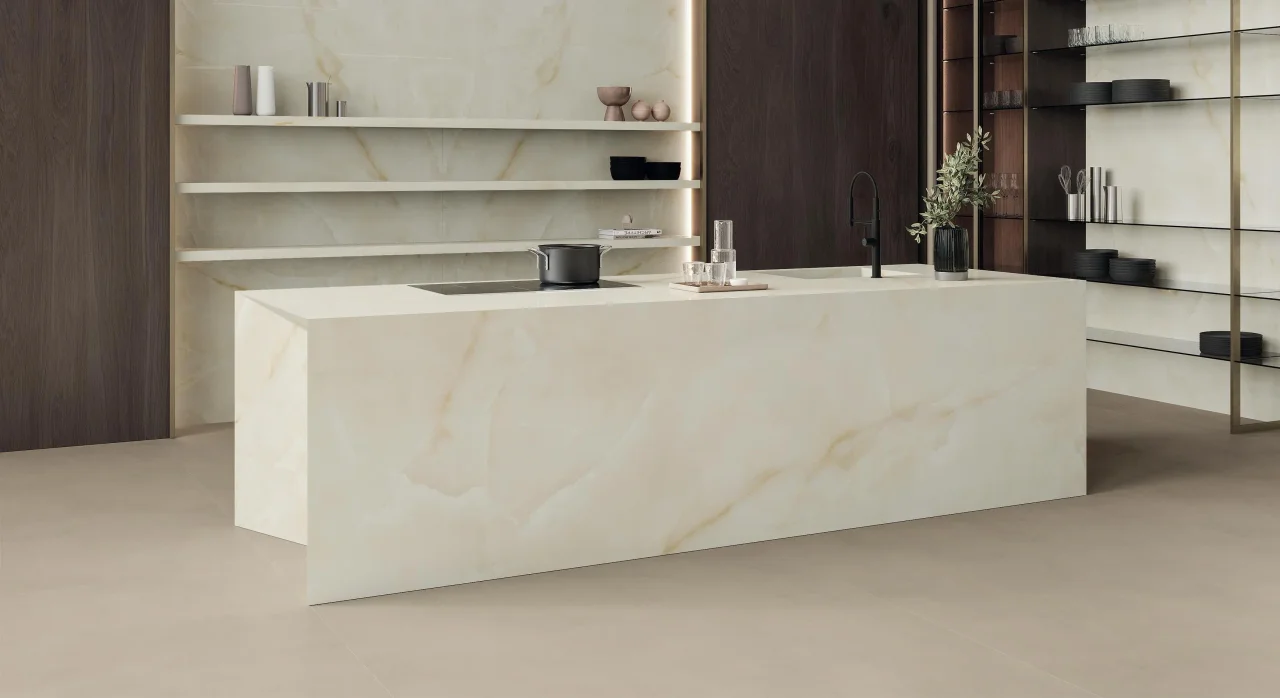

A tile kept after construction may become valuable during work around pipework, furniture or equipment. Plan the reserve when ordering, alongside the tile layout and chosen references. Its value depends as much on identification as on the quantity stored.
01
Calculate from the project’s cuts
Net area does not capture every cutting loss. A directional pattern, niche, corner or large format can change requirements. Ask the installer to calculate the order from approved setting-out drawings.
Separate the allowance needed to complete installation from the reserve intended for future interventions. Confusing them can leave the client with no tiles at handover. There is no single percentage suitable for every room and pattern.
02
Identify exactly what was installed
Keep brand, collection, reference, format, finish and available batch or shade details. Photograph box labels before they are discarded. Add a photograph of the completed surface and identify the room.
A commercial name alone is insufficient for a search years later. A collection may change or disappear, and a later delivery should not be assumed identical to the original batch. An identified reserve reduces this uncertainty.
03
Retain genuinely useful pieces
Discuss with the contractor which whole tiles and special pieces would be useful. Very small offcuts will not replace a visible large tile. Check the condition of retained pieces before packing and moving them.
For strongly veined designs, also record the patterns available in the reserve. Future repairs can then take the existing composition into account. Do not promise complete invisibility: grout, light and wear of the surface also matter.
04
Organise storage and handover
Follow manufacturer storage and handling instructions. Choose a stable, protected location suitable for the weight of the boxes. Keep references legible and avoid improvised stacks in circulation areas.
At handover, give an inventory to the owner or operator. In a hotel, separate reserves by room type. EDIFIS can help locate documentation for the selected collections from the references actually ordered.
Before you decide
- Calculate cuts with the installer.
- Separate installation allowance from spares.
- Archive references, batches and shades.
- Hand over a located inventory.
The essentials
Your questions, our guidance.
Should only offcuts be retained?
No. Choose pieces for possible repairs, often including whole tiles.
Will the same tile necessarily be available later?
It is not guaranteed. Collections and batches can change; keep precise references and an appropriate reserve.
From idea to project
Discover at EDIFIS
EDIFIS surfacesCifre CerámicaCollection cataloguesConfirm references, configurations, finishes and availability for your project.
Documentation & references
EDIFIS design advice. For specifications and installation, consult the documentation for the selected reference.
Atlas Concorde · quantities and pre-installation checks ↗