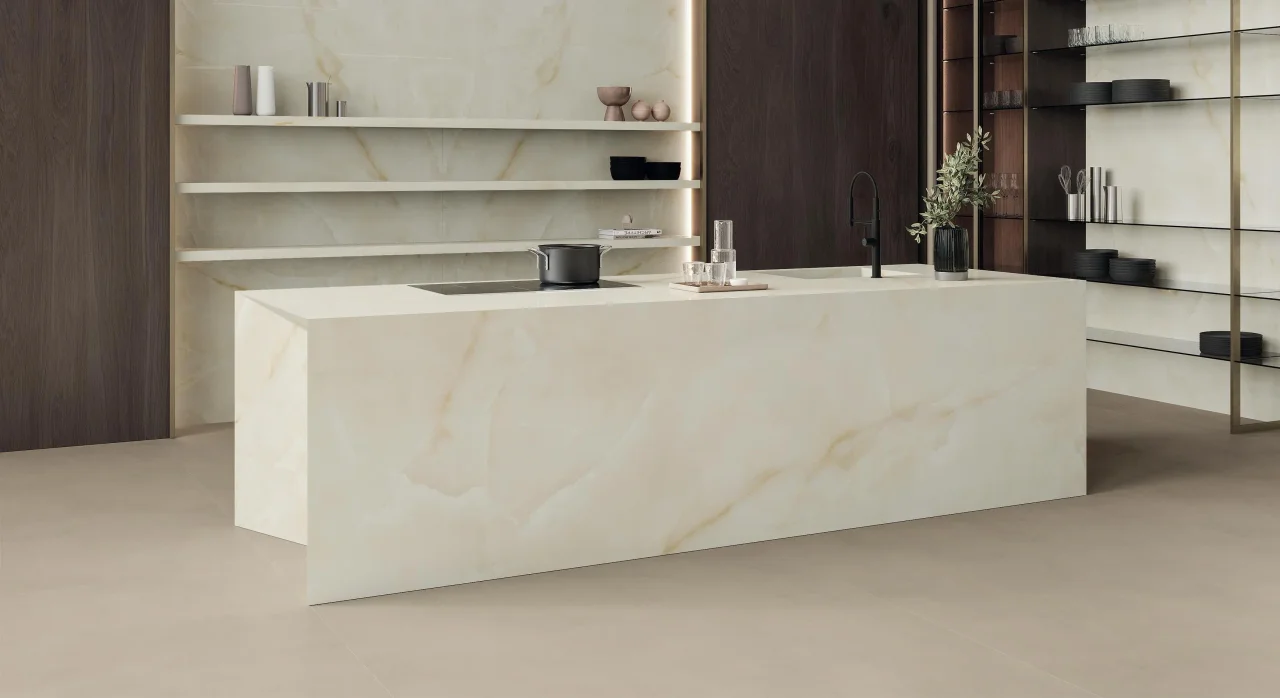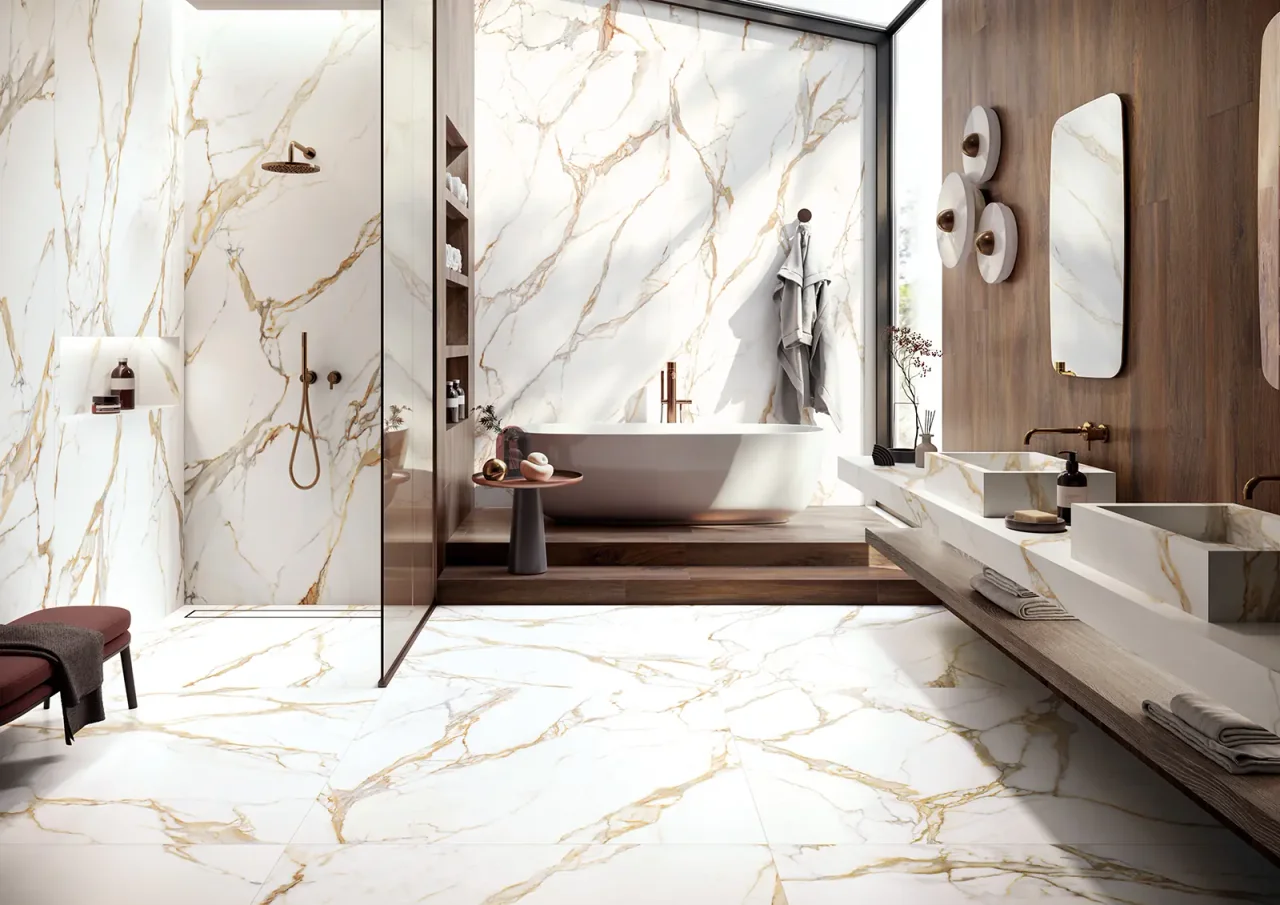
Terrazzo effect introduces a dotted pattern of fragments in varied sizes and colours. It can animate a splashback or become the connecting theme of a bathroom. To use it thoughtfully, choose its scale before selecting furniture and tap colours.
01
Look at the grain from the actual viewing distance
A fine grain may read as an almost uniform texture from the door. A large fragment retains a stronger graphic presence. Compare a surface assembled from several tiles: the pattern makes sense through repetition and cuts.
On a small splashback, a large fragment may be interrupted by a socket or tap. This is not necessarily a problem but should be anticipated. Test the scale on an elevation including equipment.
02
Extract a palette without repeating everything
Choose one dominant background colour and just one secondary shade from the pattern. They can guide furniture and walls. Repeating every fragment colour risks dispersing attention and making the composition busier than expected.
A cream ground with warm fragments invites different combinations from a grey ground with black pieces. Place the sample near the selected sanitary ceramic and timber. Whites in particular can reveal undertones that are hard to notice alone.
03
Let the taps establish a clear line
Against an already rich pattern, the tap silhouette becomes a reference point. A simple shape and a metal consistent with the background make the composition easier to read. Black draws a line; a pale brushed metal may blend more discreetly.
Do not select a finish solely from a tiny tile fragment. That colour may disappear from a distance. Instead compare the tap with the covering's overall tone and larger project elements, such as furniture or door.
04
Specify the material actually selected
Terrazzo can describe a composite material or an effect reproduced in ceramic. Their characteristics and requirements are not interchangeable. Request the reference sheet, finish and permitted applications before confirming its installation area.
On a bathroom floor, safety in use should be examined separately from the pattern. For a splashback, consider joints, cuts and care near the water point. A pattern never removes these practical decisions.
Before you decide
- Observe the pattern across several tiles.
- Choose one secondary colour.
- Compare metal with the overall tone.
- Check the material's nature and use.
The essentials
Your questions, our guidance.
Does terrazzo effect require black taps?
No. Chrome or brushed metals may be more discreet. It depends on the pattern's contrast and the character desired.
Can the same effect be used on wall and floor?
Yes, if the references suit each use. You can retain the pattern while adapting the finish to the area.
From idea to project
Discover at EDIFIS
Explore coverings and effectsCompare taps and mixersPresent your plan and paletteConfirm references, configurations, finishes and availability for your project.
Documentation & references
EDIFIS design advice. For specifications and installation, consult the documentation for the selected reference.
EDIFIS · porcelain stoneware coverings ↗