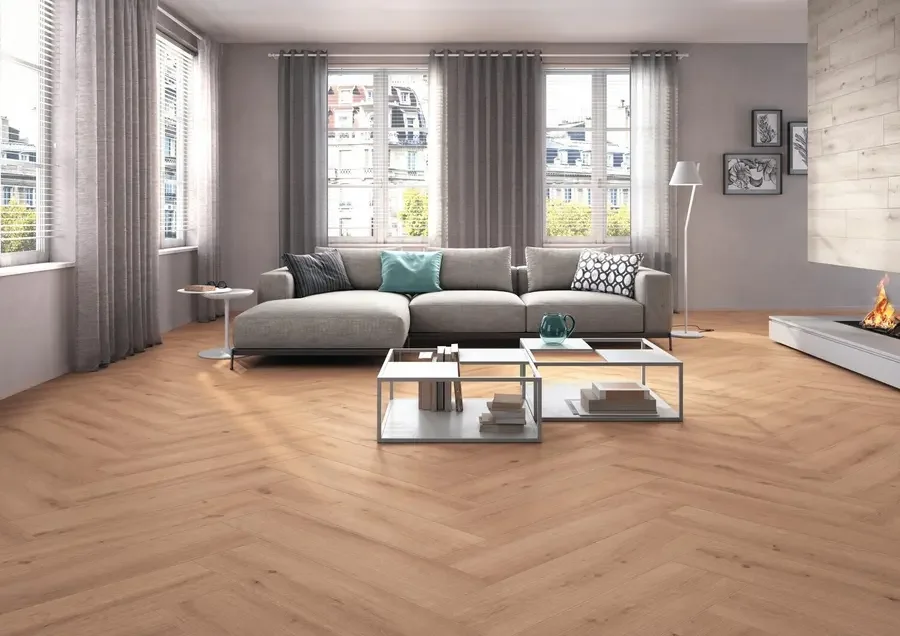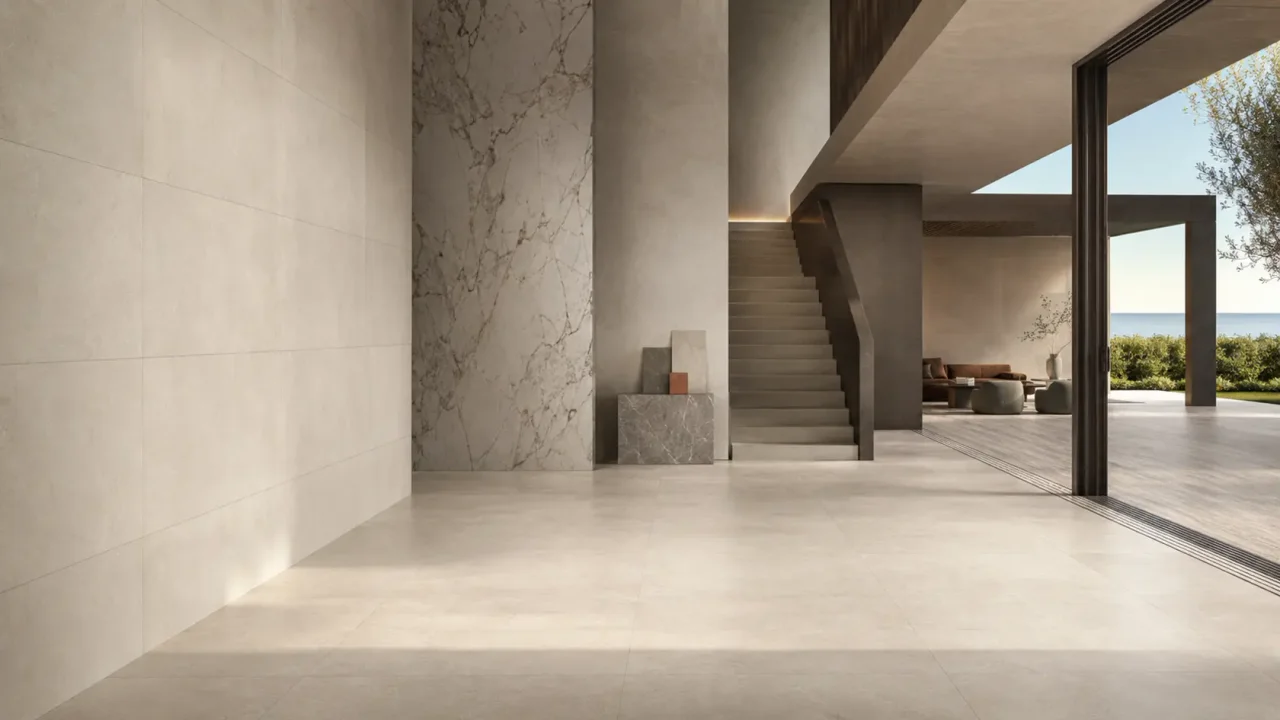
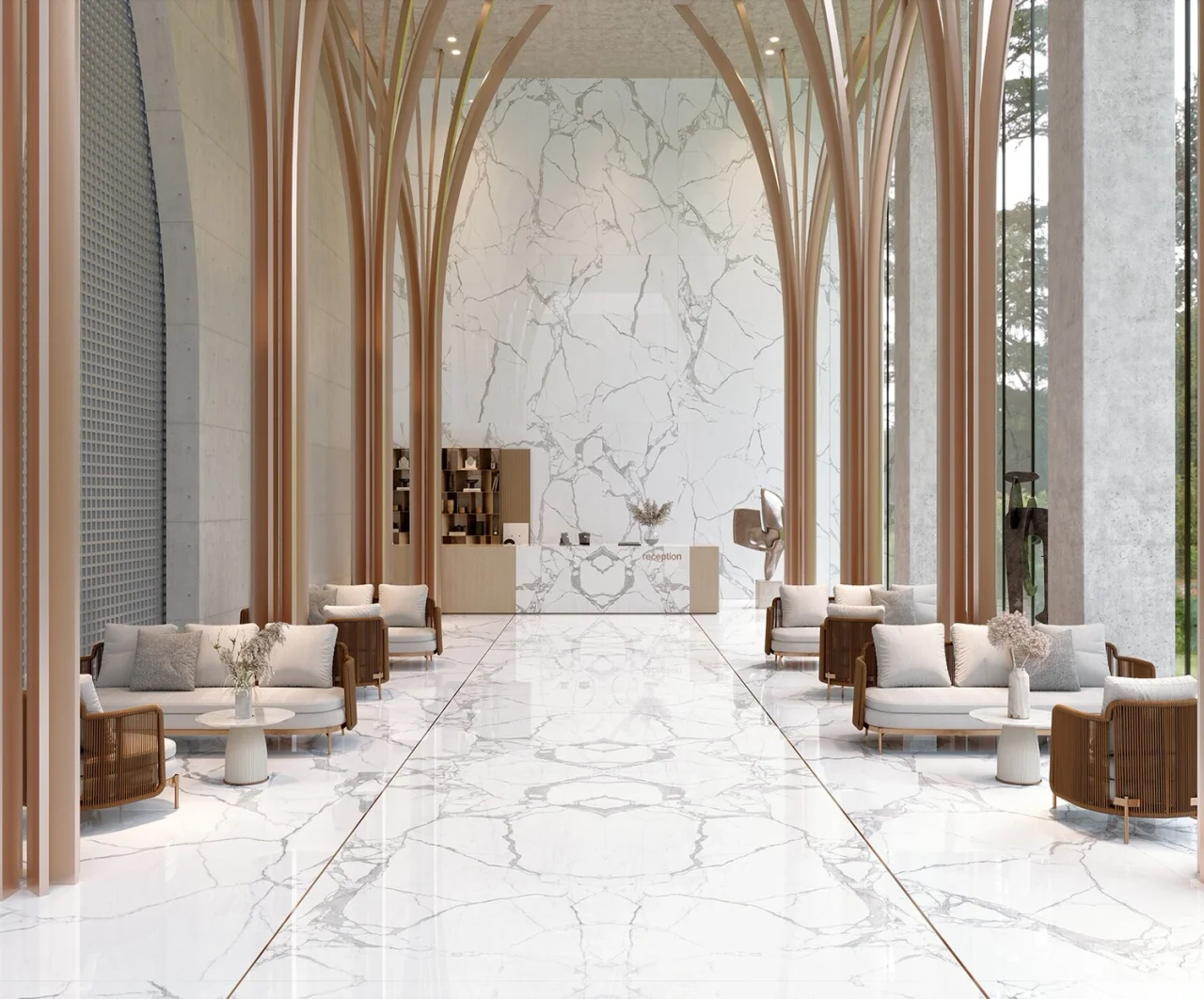
The same wood knot twice in front of a full-height window is surprisingly easy to spot. On printed porcelain, a graphic face is one of the designs for a particular tile reference. A photograph of one tile shows just one of them.
01
Ask for the sheet for your tile size
Cifre Cerámica’s Vermont sheet illustrates several designs for a single colour and size. Look up the exact reference you are considering. The range of tones and the number of designs tell you different things about the finished floor.
02
Pick out a distinctive mark
Lay out a few tiles from several boxes of the same batch. Look for a forked vein, a light patch or a dark knot. You can use it to recognise a design even when you view it from the opposite direction.
03
Arrange the most visible area
Start with the view through the door or the open space in front of the sofa. Move matching patterns apart and stand where you usually see the floor. In a furnished room, this view matters more than the geometric centre.
04
Keep a record of the layout
Photograph the trial and identify the rows on the plan. Before rotating a tile, ask the installer to check any direction markings for this model.
Before you decide
- Ask to see the graphic faces for the exact reference
- Compare several boxes from one batch
- Photograph the area visible from the entrance
The essentials
Your questions, our guidance.
Does the number of faces tell me what is in each box?
The sheet describes the graphics for that reference. Check the manufacturer’s packing information to find out how designs are distributed between boxes.
From idea to project
Discover at EDIFIS
Check shade and batchChoose the direction of travertine-look veiningConfirm references, configurations, finishes and availability for your project.
Documentation & references
EDIFIS design advice. For specifications and installation, consult the documentation for the selected reference.
Cifre Cerámica · Vermont graphic face sheets ↗