
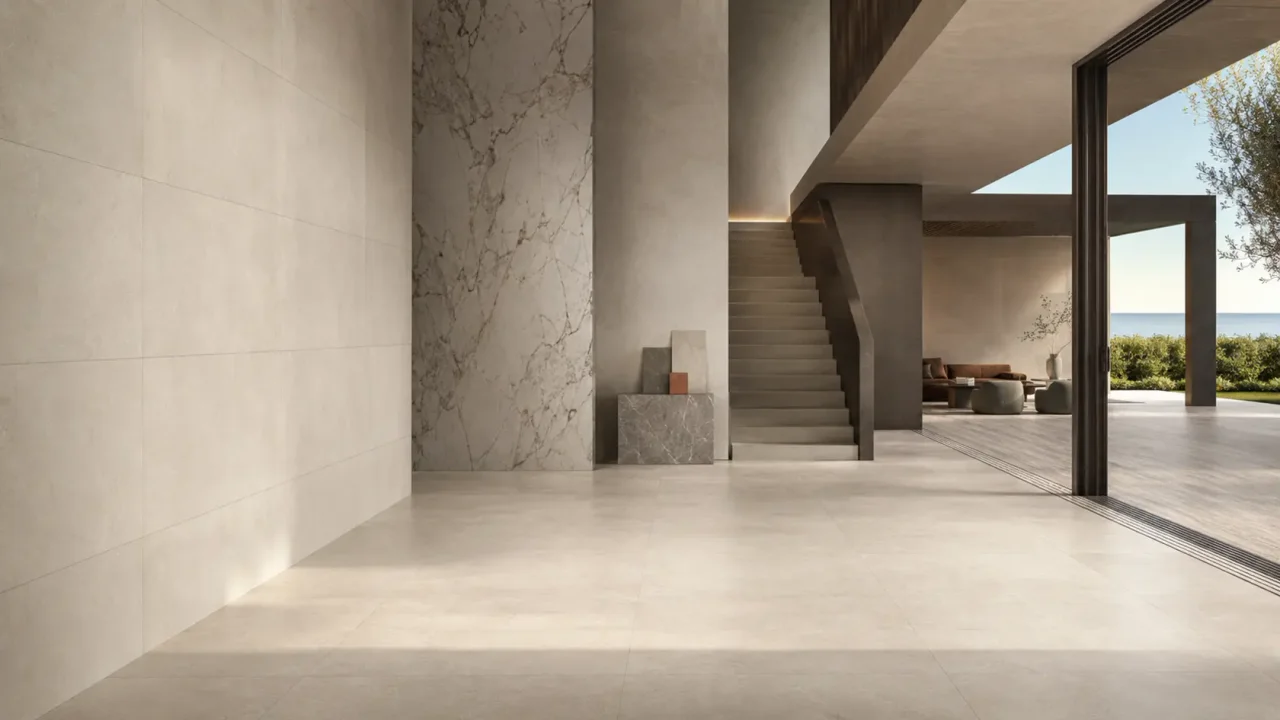
A commercial floor works differently in each zone. Customers, deliveries, furniture and cleaning create different demands. For a shop, showroom or reception space in Tunisia, describe the operation before choosing a stone or marble effect.
01
Map how the premises operate
Separate the entrance, main routes, sales areas, stockroom and delivery access. Identify unavoidable passageways: even a small shop can concentrate many movements in one spot.
State whether trolleys, mobile displays or concentrated loads are expected. Include the details needed by the designer; the daily number of visitors alone does not describe everything.
02
Check the intended use of the product
Atlas Concorde’s commercial collections provide starting points, but approval concerns one specific variant. Size, finish and thickness must be considered together with declared performance and the installation system.
Ask the supplier for documentation matching the expected traffic. A design used in a hotel does not demonstrate suitability for your entrance, loads or maintenance routine.
03
Include cleaning in the specification
Identify likely dirt: dust brought from outdoors, water at the entrance or residues from the activity. Compare permitted cleaning methods and access for maintenance equipment.
Assess samples under the business’s actual lighting. A highly reflective surface may change how marks and flatness variations are perceived; judge this against everyday operation.
04
Arrange junctions and maintenance access
Locate thresholds, joints, hatches and zone transitions before fixing the pattern. The floor must preserve access to equipment and necessary technical details, including beneath continuous furniture.
Keep the reference, approved sample, plan and maintenance procedure in the handover file. EDIFIS can review the selection against the constraints supplied; confirm suitable variants and availability before ordering.
Before you decide
- Define every zone.
- Document the loads.
- Approve maintenance.
- Keep the data sheets.
The essentials
Your questions, our guidance.
Can residential tiles be used in a shop?
Not automatically. Confirm the selected product’s intended use and performance.
Should visitor numbers be the only criterion?
No. Loads, wheels, dirt and concentrated traffic also matter.
From idea to project
Discover at EDIFIS
Explore collectionsPlace textures according to cleaning needsPresent my commercial projectConfirm references, configurations, finishes and availability for your project.
Documentation & references
EDIFIS design advice. For specifications and installation, consult the documentation for the selected reference.
Atlas Concorde ↗