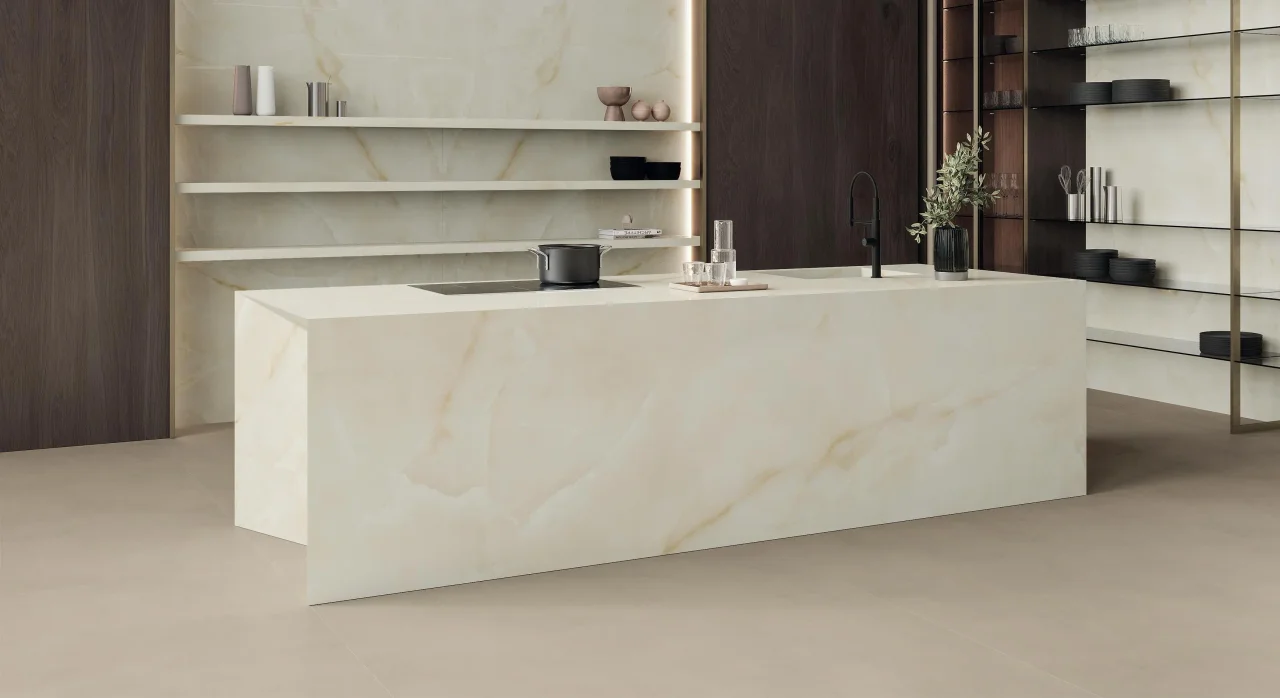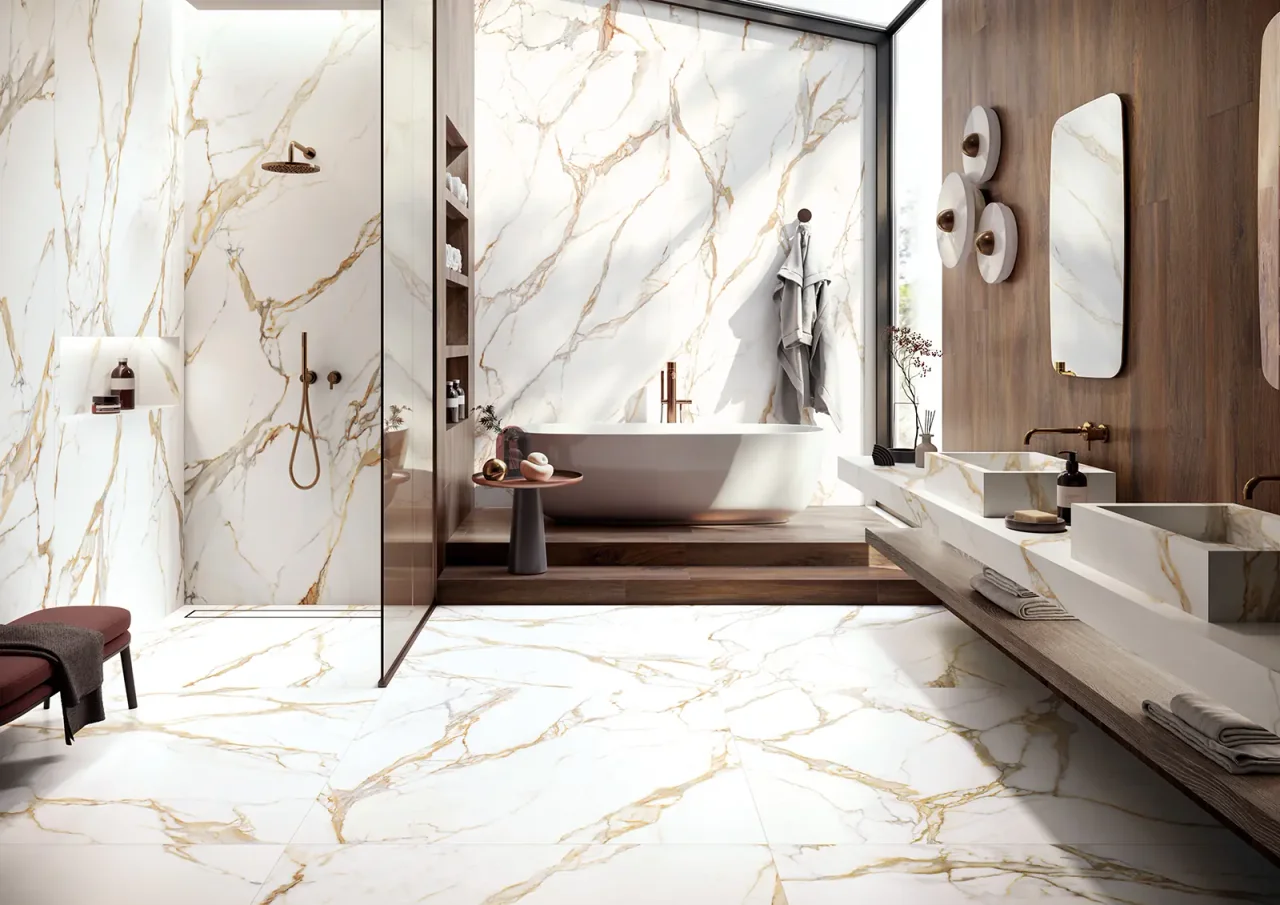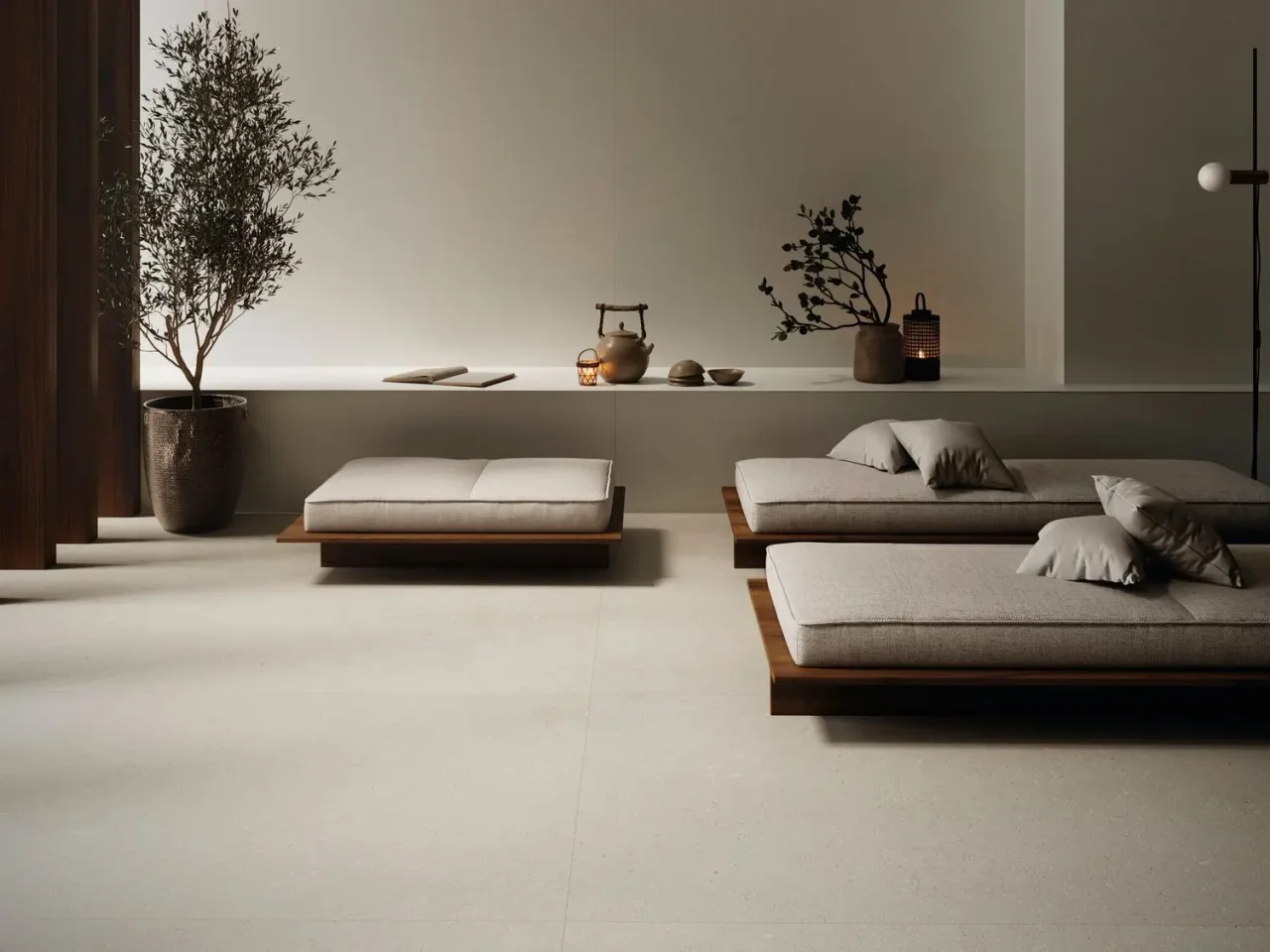
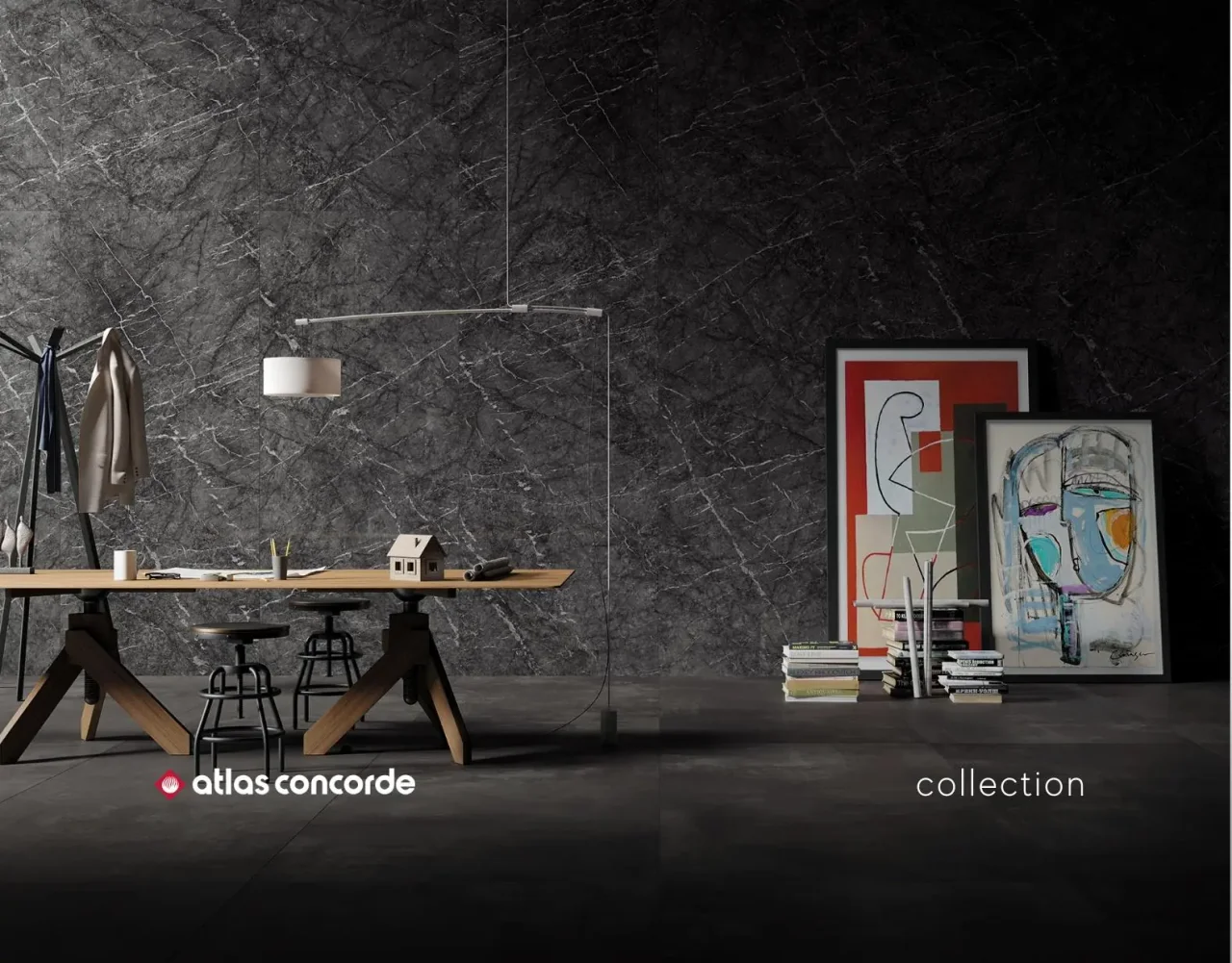
A beige tile may look greyer once installed, and a warm metal may change its presence in the evening. The 2026 trends foreground material and light, notably at Cifre Cerámica. For your project, the right decision comes from comparing samples in conditions close to the finished room.
01
Observe different times of day
Place samples beside the window of the room concerned, then further into the area being fitted out. Look at them in the morning and late afternoon where possible. A material chosen in a bright showroom may behave differently in an internal bathroom.
Keep the tile, cabinet front and metal together. The aim is to judge their relationships, rather than decide separately that each sample looks attractive. Add a neutral white reference and avoid strongly coloured fabrics that could alter your perception.
02
Try the intended lighting
Where possible, use the actual luminaire or a comparable light source. Two LEDs described as warm can render colours differently. Ask the lighting designer to confirm the selected specifications and arrange a trial where shade coordination matters.
Light direction matters too. Grazing light reveals some reliefs and irregularities more strongly. Brushed metal changes with orientation. Turn the samples and view them from normal positions, standing at the basin or seated beside the island.
03
Position materials as they will be installed
Present floor tiles horizontally and wall tiles vertically. The same product can look different in these positions. For a splashback, add a worktop sample and the tap finish: reflections are read as a complete arrangement.
At EDIFIS, compare Cifre, Tagina or Atlas Concorde materials with the finishes of the chosen equipment. Verify exact names and codes. A phone photograph remains a reminder; automatic camera and screen corrections do not replace physical samples.
04
Document the approved combination
Photograph the board, noting references, orientation and the light source used. Above all, keep the approved physical samples. If a finish or luminaire changes, repeat the comparison before assuming the original combination still works.
For projects with several rooms, distinguish the lighting settings rather than imposing one answer. A brightly lit kitchen and a windowless bathroom have different conditions. This method prevents late decorative adjustments and makes decisions easier to explain.
Before you decide
- Compare several lighting conditions.
- Try the intended LED source.
- Orient samples as they will be installed.
- Keep approved references.
The essentials
Your questions, our guidance.
Is a catalogue photograph enough to coordinate two metals?
No. It conveys an intention, but lighting, photography and the screen can change perception.
Should the same lighting be used throughout the home?
Not necessarily. The design can vary with use; material combinations should be checked in each selected setting.
From idea to project
Discover at EDIFIS
Compare materials in the showroomTHG Paris finishesEDIFIS surfacesConfirm references, configurations, finishes and availability for your project.
Documentation & references
EDIFIS design advice. For specifications and installation, consult the documentation for the selected reference.
Cifre Cerámica · material and light, Cersaie 2026 ↗Atlas Concorde · design, materials and light ↗