Two buttons let you adapt flushing to the immediate need. Their presence, however, reveals neither the actual volume settings nor the quality of the result with your WC pan. In a home in Tunisia, attentive use and a correctly adjusted system are complementary ways of avoiding unnecessary flushing.
01
Match each button to the actual need
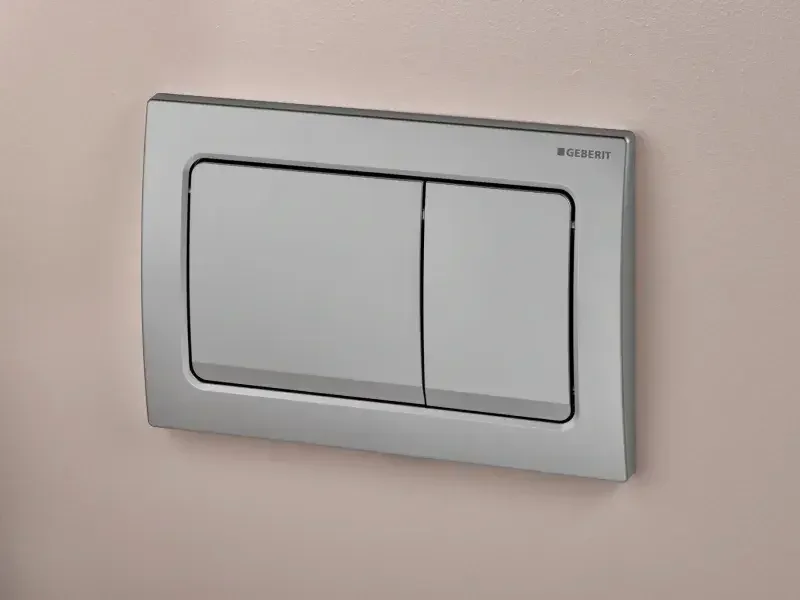
On a Geberit dual-volume control, the small flush is for liquid waste and the large flush is for solids. Ask for both actions to be demonstrated on the installed plate. Button shapes vary, and their positions should not be guessed from a different bathroom.
Explain operation simply to the occupants, including when handing over a rental property. Always using the large flush loses the benefit of having a choice. Conversely, repeating an unsuitable small flush is not a sound way to reduce consumption.
02
Distinguish water volume from flushing flow rate
Volume is the quantity of water released during a cycle. Flow rate describes how that water enters the pan during flushing. These are different parameters: water splashing outside the ceramic does not automatically mean that the selected volume is too high.
For certain mechanisms, including types 208 and 212, Geberit documents ways of adjusting volume and flow rate. The devices and adjustment ranges depend on the reference. Do not apply a value found for a different cistern or WC pan to your own installation.
03
Have the WC pan and cistern checked together
The settings must provide satisfactory flushing with the ceramic and the existing drainage system. Ask the installer to record the references, consult their requirements and check the complete system in operation. The lowest available setting is not automatically right for every installation.
After replacing a WC pan or flush mechanism, have both flushes checked again. A regular need to flush a second time deserves investigation. Changing only the volume may leave an installation, mechanism or drainage problem unresolved.
04
Observe operation over time
Once the cycle is complete, the buttons should return to rest and refilling should stop. A persistent trickle into the pan, or refilling that restarts without use, calls for a check. Dual flush cannot compensate for a leaking seal or an operating component held under pressure.
At EDIFIS, compare the proposed plate, such as an Alpha01, with the cistern and WC pan actually selected. Ask for a demonstration and keep the approved settings in the property records. They provide a useful reference for maintenance, without assigning a universal volume to the plate’s name.
Before you decide
- Clearly identify both controls.
- Choose the flush according to the need.
- Have settings approved for the WC pan and drainage.
- Report repeated flushing or persistent water flow.
The essentials
Your questions, our guidance.
Does the small button always release half the volume?
Do not assume so. Volumes depend on the mechanism and its settings; the plate alone does not determine them.
Can the volume be reduced to the lowest available setting?
Only if that setting suits the installed system. Have flushing effectiveness and the requirements of the WC pan, cistern and drainage confirmed.
From idea to project
Discover at EDIFIS
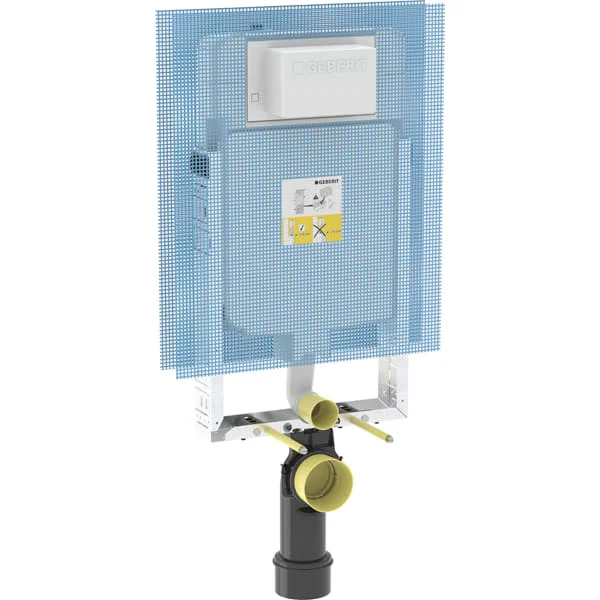
EDIFIS installation frames and cisternsSquare chrome Alpha01: check the complete systemSpot unusual water flow in the WC panDiscover Geberit at EDIFISConfirm references, configurations, finishes and availability for your project.
Documentation & references
EDIFIS design advice. For specifications and installation, consult the documentation for the selected reference.
Geberit · how dual flush works ↗Geberit · matching the flush to the WC pan ↗Geberit · mechanisms and adjustments ↗